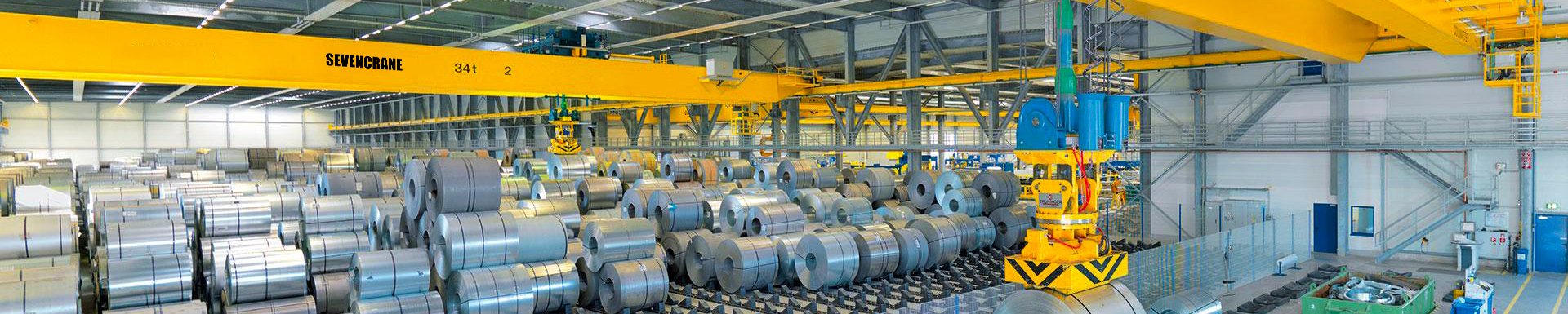

20 Ton Double Girder Gantry Crane for Factory Lifting
Overview
A double girder gantry crane is a heavy-duty lifting system designed with two parallel main beams mounted on top of rigid supporting legs and traveling along ground rails. Unlike single girder models, this crane typically uses an electric crab hoist or open winch trolley rather than a monorail hoist. The hoisting trolley runs on rails fixed to the top of the two girders, allowing it to handle higher loads with greater stability and lifting efficiency.
The two main girders are supported by one or two legs, which are connected to end beams and wheel assemblies. This structure enables the entire gantry crane to travel smoothly along the crane rails. Like other industrial gantry cranes, the double girder gantry crane offers full six-directional movement: the trolley travels left and right along the girders, the hoist lifts and lowers the load vertically, and the whole crane moves forward and backward along the runway.
For long travel distances, the crane is usually equipped with a cable reel system. This system ensures safe and reliable power supply by automatically winding and unwinding the electrical cables during crane movement.
In some designs, cantilevers are added to one or both sides of the main girders. These extensions allow loads to be lifted beyond the rail span, increasing working coverage. Cantilever length is customized based on the overall crane span and operational requirements.


Key Components
Double Girders: The core structure of a double girder gantry crane consists of two parallel main beams forming the bridge. This double-girder configuration significantly improves overall rigidity and load-bearing capacity compared with single-beam designs. It allows the crane to handle heavier loads, achieve larger spans, and maintain excellent stability during lifting and travel operations. As a result, it is well suited for high-intensity, heavy-duty industrial environments.
U-Shaped Supporting Legs: Instead of inclined A-frame legs, this double girder gantry crane adopts vertical U-shaped legs that rise straight from the ground to support the main girders. These legs are directly connected to the end carriages at the bottom and provide strong, balanced support at the top. The U-shaped design creates a wide and open working space between the legs, making it easier to handle oversized, long, or irregularly shaped loads without obstruction.
End Carriages (Saddles): Located at both ends of the crane, the end carriages serve as the foundation of the entire gantry structure. They support the U-shaped legs and contain essential travel components such as wheels, motors, and drive units. These assemblies allow the crane to move smoothly and reliably along floor-mounted rails.
Trolley Hoist System: The trolley hoist is the main lifting unit, integrating the hoist, motor, gearbox, braking system, and frame into a compact assembly. Mounted on rails atop the double girders, it travels horizontally across the span, enabling precise positioning of loads.
Crane Travel Mechanism: Longitudinal crane movement is achieved through motors and gearboxes installed on the end carriages. These drive the wheels along the ground rails, allowing the entire gantry crane to move efficiently within the working area.


Technical Features
Variable Frequency Drive (VFD) Control: Double girder gantry cranes are commonly equipped with VFD systems that allow smooth acceleration and deceleration during lifting and traveling. This not only reduces mechanical shock and component wear, but also improves positioning accuracy and lowers overall energy consumption.
Remote Control and Automation Capability: With wireless remote control and automation options, operators can manage crane movements from a safe distance. This improves operational safety, enhances visibility, and increases efficiency, especially in large or hazardous working environments.
Load Sensing and Anti-Sway Technology: Advanced sensors and control algorithms automatically detect load conditions and minimize load swing. This improves stability, reduces cycle time, and allows for safer and more precise material handling.
Collision Avoidance Systems: Integrated sensors and intelligent software help detect obstacles, nearby cranes, or restricted zones, effectively preventing collisions and protecting both equipment and personnel.
Energy-Efficient Components: High-efficiency motors, optimized gear systems, and low-loss electrical components significantly reduce power consumption and long-term operating costs.
Integrated Diagnostics and Condition Monitoring: Real-time monitoring systems track double girder gantry crane performance, detect faults early, and predict maintenance needs, helping minimize unexpected downtime.
Wireless Communication Technology: Wireless data transmission between crane components reduces complex cabling, improves system flexibility, and simplifies installation and maintenance.
Enhanced Safety Protection: Multiple safety devices, including overload protection, redundant braking systems, emergency stops, and limit switches, ensure reliable and safe crane operation.
High-Strength Materials and Precision Manufacturing: The use of advanced steel materials and modern manufacturing techniques enhances structural strength, fatigue resistance, and overall service life of the double girder gantry crane.
-

Wind-Resistant 20 Ton Double Girder Gantry Cran...
-
Industrial Drivable Gantry Crane for Bridge Con...
-
35 Ton Heavy Duty Travelling Double Girder Gant...
-

Universal Lifting and Travelling Double Girder ...
-

Long Span Double Girder Gantry Crane with Hook ...
-

Box Type Double Girder Gantry Crane with Safety...