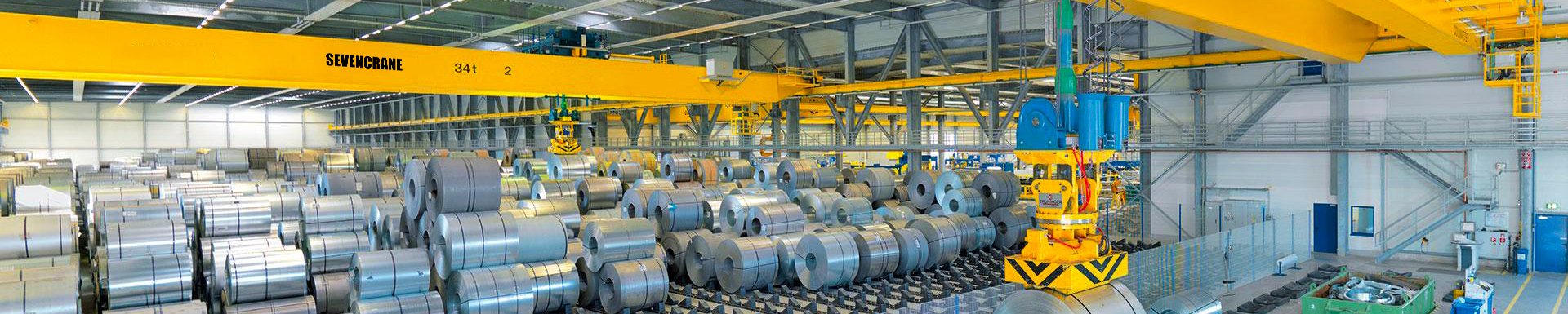

25 Ton Double Girder Gantry Crane for Steel Production
Components and Parts
A double girder gantry crane is composed of several key components that work together to ensure stable, efficient, and safe lifting operations. Each part plays an important role in overall performance and durability.
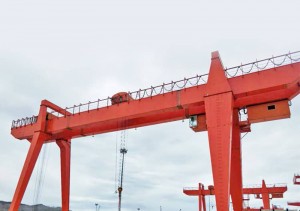
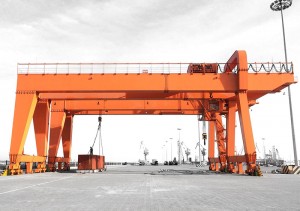
♦Main Girders (Dual Beams): The two main girders form the primary load-bearing structure of the crane. Manufactured from high-strength structural steel, they provide superior rigidity and evenly distribute loads, allowing the crane to handle heavy capacities and wide spans with confidence.
♦End Carriages: End carriages are installed at both ends of the main girders and support the entire crane structure. They house the traveling wheels and drive units, enabling smooth and stable movement of the crane along the ground rails.
♦Cross Travel Rails: Mounted on top of the main girders, cross travel rails guide the hoist trolley during transverse movement. These precision-aligned steel rails ensure accurate positioning of loads across the full span of the crane.
♦Crane Traveling Drive System: The traveling mechanism powers the crane’s long-distance movement along the runway. Typically driven by electric motors with reducers and brakes, it provides reliable operation, controlled speeds, and smooth acceleration.
♦Hoist Trolley: The hoist trolley is responsible for lifting and lowering loads. Equipped with an electric hoist or winch system, it travels along the main girders and delivers precise vertical and horizontal load handling.
♦Control System: The control system allows operators to manage all crane movements safely and efficiently. Depending on requirements, it may include a cabin control, pendant control, or wireless remote control for flexible operation.
Together, these components ensure the double girder gantry crane delivers high performance, safety, and long-term reliability in demanding industrial environments.


Typical Applications
Double girder gantry cranes are widely used in industries that require the safe, precise, and efficient handling of heavy loads. Thanks to their high lifting capacity and structural stability, they play a key role in demanding working environments.
♦Heavy Manufacturing: In heavy manufacturing plants, double girder gantry cranes are essential for production, assembly, and maintenance operations. They are commonly used to lift, position, and align large machinery such as generators, presses, and industrial equipment. By enabling smooth movement of oversized components, these cranes help streamline assembly lines, improve workflow efficiency, and reduce production downtime. They are also ideal for handling heavy parts during fabrication processes where accuracy and reliability are critical.
♦Construction Sites: On construction sites, double girder gantry cranes support the transportation and installation of large and heavy building materials. They are frequently used to move steel beams, prefabricated components, concrete blocks, and structural panels. Their wide span and strong load-bearing capability allow materials to be relocated quickly across the site, significantly improving productivity and helping projects stay on schedule. They also assist in assembling large structural elements with precision and safety.
♦Shipyards: In shipbuilding and ship repair facilities, double girder gantry cranes are indispensable. They are used to lift and transport heavy ship components such as hull sections, engines, propellers, and deck equipment. Designed for both indoor and outdoor operation, these cranes meet the challenging requirements of shipyards while enhancing safety, efficiency, and project turnaround time.
Overall, double girder gantry cranes are reliable lifting solutions across manufacturing, construction, and shipyard industries.


What Should Be Considered When Selecting an Ideal Gantry Crane
Choosing the right double girder gantry crane is a critical decision that directly affects operational efficiency, safety, and long-term costs. Before making a purchase, several key factors should be carefully evaluated to ensure the crane fully matches your project requirements.
♦Type of Gantry Crane: First, determine the most suitable crane type for your application. Options include full gantry cranes, semi-gantry cranes, grab gantry cranes, and rubber-tyred gantry cranes. Each type is designed for specific working environments and material-handling needs, so selection should be based on site conditions and operational demands.
♦Technical Parameters: Clearly define the required lifting capacity, span, and lifting height. These parameters directly influence the crane’s structural design, configuration, and overall cost. Accurate data helps engineers design a crane that is both safe and economical.
♦Handled Materials: Consider the type, size, and characteristics of the materials being lifted. Based on this information, lifting devices such as hooks, grabs, or special attachments can be customized to ensure efficient and secure handling.
♦Working Duty and Operating Time: Evaluate how many hours the crane will operate each day. Longer and more frequent operation requires a higher duty classification to ensure durability, reliability, and reduced downtime.
♦Project Budget and Cost Efficiency: Budget plays an important role in crane selection. With a clear budget range, manufacturers can recommend the most cost-effective solution, balancing performance, safety, and long-term value.
By considering these factors in advance and communicating them clearly, you can ensure the gantry crane selected delivers optimal performance and a strong return on investment.
-
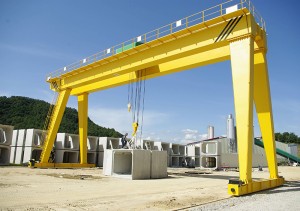
Heavy Duty Winch Trolley Double Beam Gantry Crane
-
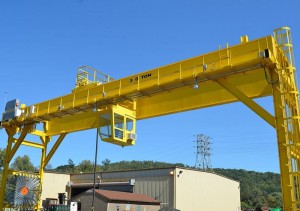
35 Ton Heavy Duty Travelling Double Girder Gant...
-
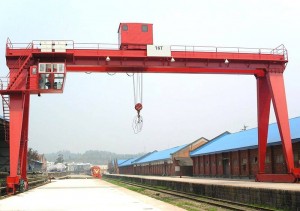
Shipping Container 40 Ton 45 Ton Cantilever Gan...
-

20 Ton Double Girder Gantry Crane for Outdoor U...
-
Electric Hoist Trolley Metro Construction 30 To...
-
Customized Lifting Hoist 50 Ton Port Container ...