
CE Certified Wireless Remote Control Top Running Bridge Crane
Overview
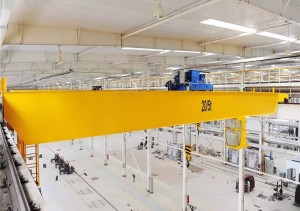
A top running bridge crane operates on a fixed rail or runway system installed on top of runway beams. The crane’s end carriages travel along these rails, supporting the bridge structure and hoisting system while enabling smooth and stable movement across the working area. This design makes top running cranes highly suitable for industrial facilities requiring long travel distances and heavy-duty lifting.
Top running bridge cranes are an excellent solution for facilities with limited headroom, as their configuration maximizes lifting height and optimizes overhead space. They are capable of supporting long bridge spans and large lifting capacities, commonly handling loads of 20 tons or more, making them ideal for heavy manufacturing, warehouses, and large-scale workshops.
These cranes offer flexibility for both light and heavy loads, ensuring efficient material handling across a wide range of applications. Their robust structure provides superior stability, durability, and long-term operational reliability. In addition, top running cranes are designed for easy installation, maintenance, and servicing, reducing downtime and improving productivity.
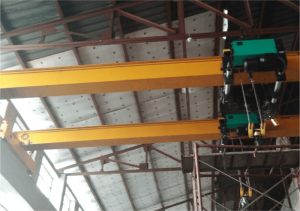
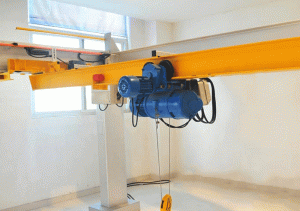
Top running bridge cranes can be manufactured in single girder or double girder configurations. Single girder models typically feature an under-hung hoist and trolley, while double girder designs commonly use a top-running hoist system to achieve higher lifting capacity and enhanced performance.


Key Features of Top Running Bridge Crane
Robust Structural Design
Top running bridge cranes are installed on runway rails mounted on the upper structure of the workshop, allowing full utilization of floor space while maximizing lifting height. Built with high-strength steel or lightweight alloy materials, they offer excellent load-bearing capacity while reducing overall structural stress on the building. Their modular design enables faster assembly, easier maintenance, and flexible upgrades.
High Flexibility and System Integration
These cranes are highly adaptable to various industrial layouts, supporting straight, curved, or complex rail configurations. They can operate as standalone systems or be integrated with automated production lines, bridge cranes, and AGV systems to create a seamless material handling workflow. This adaptability makes them suitable for dynamic manufacturing and logistics environments.
Multiple Operating Modes with Precision Control
Top running bridge cranes support a range of operation options, including pendant control, wireless remote control, and cabin operation. Advanced variable frequency drives ensure smooth acceleration, deceleration, and accurate load positioning. Precision control technology allows for stable handling of sensitive or high-value materials, improving both safety and productivity.
Advanced Safety and Protection Systems
Safety is a core feature of top running bridge cranes. They are equipped with overload protection, emergency braking systems, anti-collision sensors, and automatic limit switches to prevent operational hazards. In case of power failure or emergency, integrated braking mechanisms ensure secure load suspension and operator protection.
Energy Efficiency and Environmental Performance
Designed with high-efficiency motors and optimized drive systems, these cranes minimize energy consumption while maintaining strong performance. Low-noise operation enhances workplace comfort, and eco-friendly components help reduce long-term operating costs, making them a sustainable choice for modern industrial facilities.


Typical Applications of Top Running Bridge Crane
Manufacturing and Industrial Production
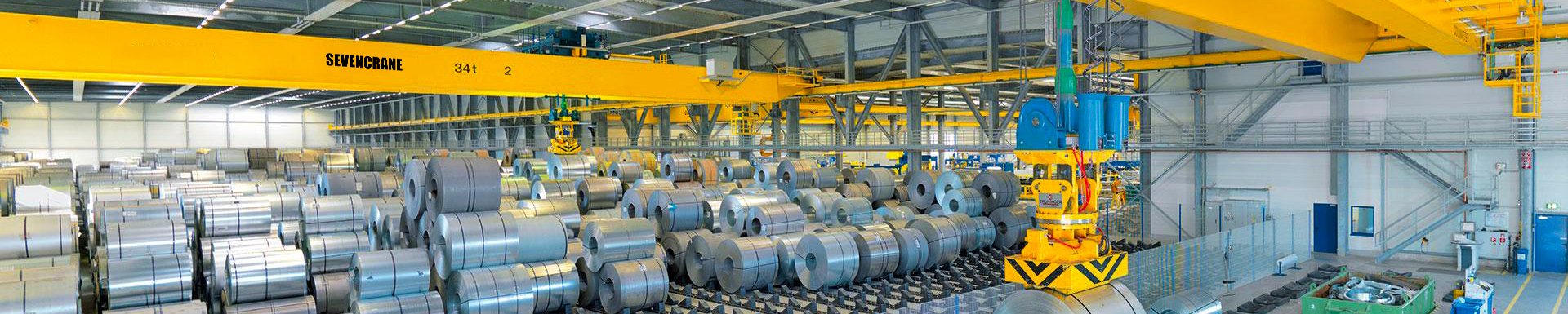
Top running bridge cranes are widely used in automotive plants, machinery manufacturing, and machining workshops for lifting, positioning, and transferring heavy components. Their high precision and stability improve production efficiency and reduce manual labor in assembly lines and fabrication processes.
Logistics, Warehousing, and Distribution Centers
These cranes play a key role in large-scale warehouses, e-commerce fulfillment centers, and cold chain logistics facilities. They enable fast and safe loading, unloading, stacking, and movement of goods, optimizing space utilization and improving inventory handling efficiency.
Light Industry and Consumer Goods Production
In industries such as food processing, beverage manufacturing, textiles, and packaging, top running bridge cranes assist in transporting raw materials, semi-finished products, and finished goods. Their smooth and controlled movement helps protect delicate or lightweight materials from damage.
Maintenance, Repair, and Heavy Equipment Overhaul
Top running bridge cranes are also essential in maintenance workshops and service facilities for large equipment, including aircraft, railway vehicles, turbines, and industrial machinery. Their reliable lifting capacity and precise positioning support safe inspections, repairs, and component replacements.