
Customizable Single Girder Gantry Crane with High Lifting Capacity
Overview
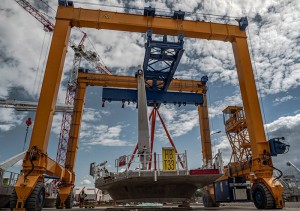
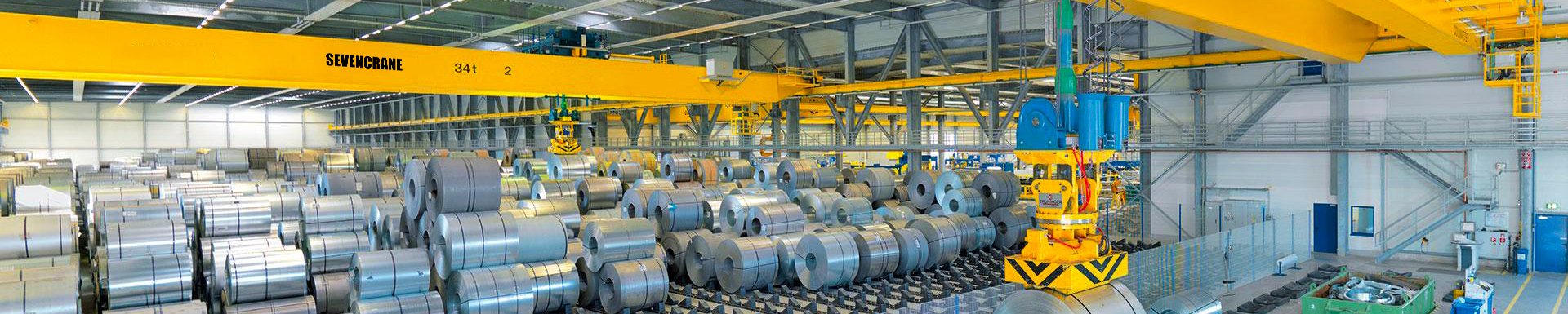
Single girder gantry cranes are versatile and economical lifting systems widely used in workshops, warehouses, construction sites, and outdoor storage yards. They are built with one horizontal main girder supported by sturdy legs, forming a portal frame that travels on ground rails or wheels. This structure allows the crane to move freely across the working area while lifting and transporting loads efficiently. Thanks to their practical design, these cranes provide a space-saving and cost-effective solution for many medium-duty material handling tasks.
A typical single girder gantry crane consists of the main beam, support legs, ground beam or end carriage, hoisting mechanism, traveling system, and electrical control system. The crane usually works together with an electric wire rope hoist that travels along the main girder to lift and position materials accurately. Depending on operational needs, the crane can be designed with single or double cantilevers, or without cantilevers, to match different site layouts and loading requirements.
Single girder gantry cranes are generally suitable for lifting capacities from about 1 to 30 tons, with spans ranging roughly from 7 to 30 meters. They commonly operate in working classes A3 or A4 and can function reliably in temperatures from −20°C to 40°C. Constructed mainly from high-quality steel, these cranes offer excellent strength, durability, and long service life while maintaining relatively low manufacturing and maintenance costs. Compared with double girder gantry cranes, their simpler structure makes installation easier and operation more economical, making them an ideal choice for businesses seeking reliable lifting performance with efficient investment.


Cost-Effective Purchasing and Operation Tips
Define Operational Requirements Carefully
Before purchasing, evaluate your actual lifting needs, including load capacity, span, lifting height, duty cycle, and working environment. Selecting a crane that precisely matches your operational conditions helps avoid overspending on unnecessary features or underinvesting in equipment that cannot meet production demands. A properly specified crane ensures both safety and long-term efficiency.
Compare Equipment Performance and Quality
Review different manufacturers, technical specifications, and configuration options before making a decision. Instead of focusing only on the lowest price, consider durability, structural strength, component quality, and after-sales support. Choosing a reliable and well-engineered crane reduces downtime, improves productivity, and lowers maintenance costs over time.
Consider Flexible Payment and Investment Strategies
Analyze whether purchasing outright, staged payment plans, or financing solutions best suit your company’s financial planning. A well-structured investment approach can reduce short-term financial pressure while still allowing you to obtain high-quality lifting equipment that supports business growth and operational stability.
Account for Full Lifecycle Costs
The real cost of a crane goes beyond the purchase price. Include installation, energy consumption, maintenance, spare parts, inspections, and potential upgrades in your budget planning. Implementing regular preventive maintenance and operator training can significantly extend service life, improve reliability, and minimize unexpected repair expenses.
Evaluate Productivity Benefits and Return on Investment
Assess how the crane will improve workflow efficiency, reduce manual labor, shorten handling time, and increase operational safety. A well-chosen single girder gantry crane should enhance throughput and reduce operational delays. Estimating the long-term productivity gains and cost savings will help confirm that the investment supports your business goals and delivers a strong return.


FAQ
♦Can the crane be customized for my project?
Yes. Every working environment and lifting requirement is different, so all our single girder gantry cranes can be fully customized. We design the crane based on your lifting capacity, span, lifting height, site layout, and operational needs to ensure the solution fits your application safely and efficiently.
♦What operation methods are available?
We offer several control options to match different working preferences and safety requirements. You can choose a push-button pendant control for simple ground operation, a wireless remote control for greater mobility and visibility, or a cabin control system for large cranes requiring continuous professional operation.
♦My workshop has limited headroom. Can I still install a crane?
Yes. We provide specially designed low-headroom configurations that maximize lifting height within restricted spaces. Our engineers will evaluate your workshop dimensions and recommend the most suitable structure and hoist arrangement to ensure optimal performance.
♦Do you provide lifting accessories?
Certainly. We can supply a wide range of lifting tools and attachments, including hooks, electromagnetic lifters, grab buckets, and other customized devices, depending on the type of materials you need to handle.
♦What information should I provide to receive an accurate quotation?
To prepare the most suitable design and quotation, we recommend sharing details such as required lifting capacity, span length, lifting height, power supply voltage, working environment, and the type of materials to be lifted. Workshop drawings or site photos are also very helpful, as they allow our engineers to design a safer and more precise crane solution.