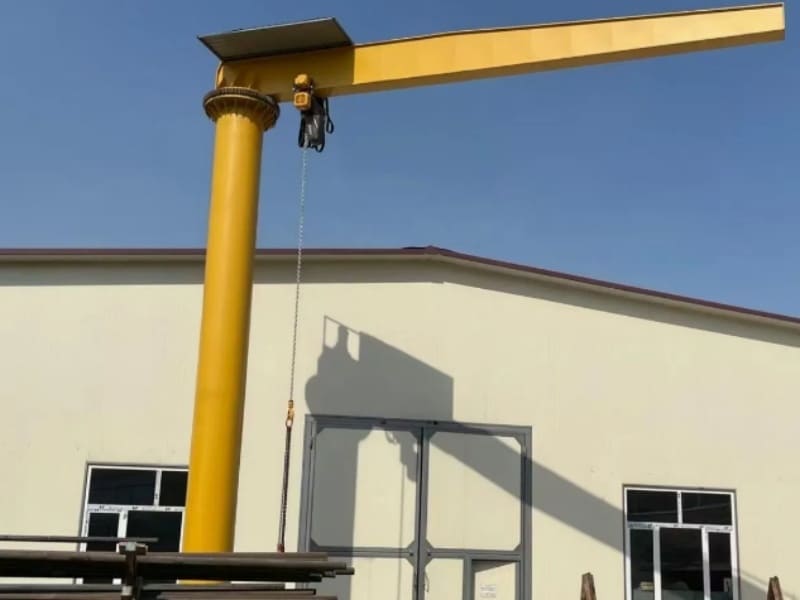
A pillar jib crane is a compact and efficient lifting solution designed for light to medium-duty material handling. With continuous technological development, this type of crane has become increasingly popular due to its simple structure, reliable performance, and high operational efficiency. The free-standing pillar design allows the crane to rotate smoothly, providing excellent flexibility for daily lifting tasks.
Pillar jib cranes are known for their energy-saving operation and time efficiency. They reduce manual labor while improving workflow, especially in short-distance and high-frequency lifting applications. Capable of operating within a three-dimensional working area, the crane enables precise positioning of loads with minimal effort.
Widely used in workshops, warehouses, docks, and other fixed working locations, pillar jib cranes are an ideal choice for improving productivity, ensuring safety, and optimizing space utilization in modern industrial environments.
Advantages
♦High Space Utilization: The pillar jib crane occupies minimal floor space while covering an impressive radius of over 10 meters, making it ideal for environments with dense equipment setups or limited space.
♦Flexible Operation: Combining the crane’s rotating arm with the hoist’s movement allows for precise load positioning, even to millimeter accuracy. The variable frequency drive system ensures smooth motion and minimizes load swinging during operation.
♦Cost-Effective: Compared to overhead bridge cranes, pillar jib cranes require a lower initial investment and are easier to maintain. Over time, they offer significant cost advantages due to their simple maintenance needs and long service life.
♦Safety and Reliability: Equipped with multiple safety features such as overload protection, emergency stop buttons, and limit switches, the pillar jib crane complies with industry safety standards, ensuring safe operation and protecting both personnel and equipment.
These features make pillar jib cranes a reliable, cost-effective, and versatile solution for material handling in various industries, from workshops to warehouses and production facilities.
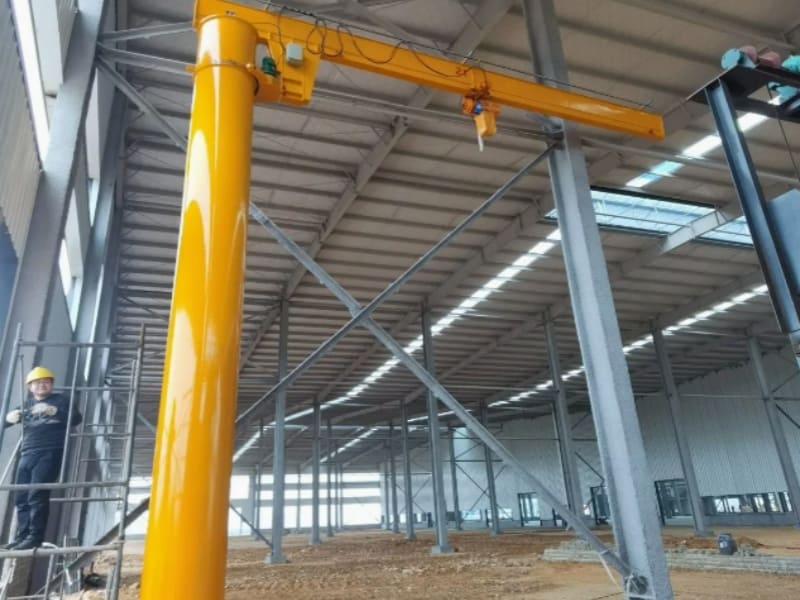
Safe Operation Guidelines
♦Pre-Operation Inspection: Before starting work, carefully check the overall condition of the floor mounted jib crane. Ensure there is no visible damage to the structure, column, or jib arm. Inspect the wire rope or chain for broken strands, excessive wear, or deformation, and confirm that the hook is not cracked or excessively worn. Test all safety devices, including overload protection, limit switches, and the emergency stop button, to make sure they are functioning properly.
♦Standard Operating Practices: Operators should control the crane using the designated control panel or remote control while maintaining a safe distance. Before fully lifting a load, perform a trial lift of about 10–20 cm to confirm the load is balanced and securely attached. During lifting and traveling, never allow personnel to stand or walk beneath a suspended load, and avoid sudden starts or stops to reduce load swing.
♦Emergency Response: If any abnormal noise, vibration, or malfunction is detected, immediately press the emergency stop button and disconnect the power supply. Troubleshooting and repairs must only be carried out after the crane is fully powered off. Operating the floor mounted jib crane while a fault is present is strictly prohibited.
♦Load Limit Control: Always operate within the rated lifting capacity of the floor mounted jib crane. Overloading, side pulling, or diagonal lifting must be avoided, as these practices can lead to equipment damage and serious safety hazards.
The pillar jib crane, while a small and lightweight piece of equipment, plays a critical role in industrial operations. It fills the gap where larger cranes cannot operate in confined spaces, significantly reducing manual handling and labor intensity. With precise selection and proper operation, it ensures both safety and high efficiency in various tasks.
From workshops to warehouses, and from assembly lines to material handling, its versatile design makes it an indispensable tool for improving productivity. The flexibility and compact nature of the pillar jib crane allow it to adapt to various operational environments, making it a key component in modern industrial processes.
This pillar jib crane is not only crucial for enhancing operational efficiency but also serves as an essential part of fine-tuned, high-precision industrial workflows. Its ability to streamline heavy lifting in tight spaces makes it an invaluable asset in any manufacturing or assembly operation.