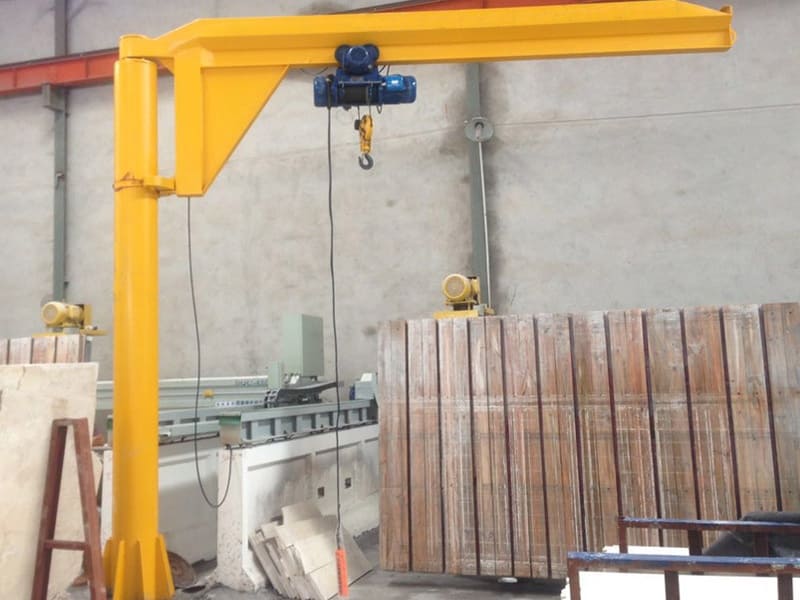
In modern industrial environments, efficient material handling within limited space has become increasingly important. A pillar jib crane is a compact and reliable lifting solution designed to meet this demand. Supported by a fixed vertical column and equipped with a rotating jib arm, this type of crane enables precise lifting and positioning of loads without relying on large overhead crane systems. Typical lifting capacities range from 0.5 tons to 10 tons, with the 2 ton jib crane being one of the most commonly used configurations across various industries.
The main advantage of a pillar jib crane lies in its ability to replace manual handling while reducing dependence on large bridge cranes. It operates independently at a single workstation, helping to minimize waiting time, improve workflow efficiency, and enhance workplace safety. A freestanding jib crane, in particular, offers even greater flexibility, as it does not require support from walls or building structures and can be installed almost anywhere with a suitable foundation.
Typical Applications of Pillar Jib Cranes
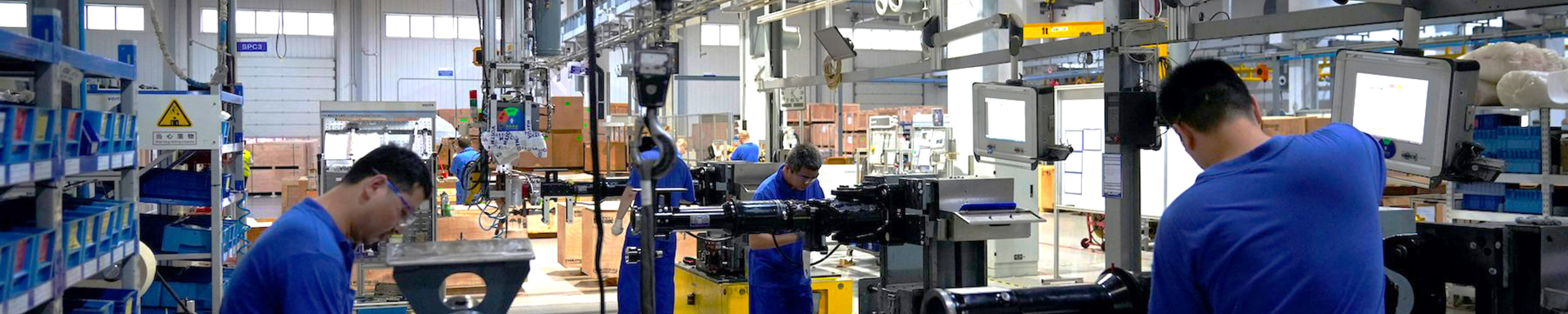
Machining and Manufacturing Workshops
In machining shops, pillar jib cranes are widely used for loading and unloading workpieces near CNC machines, lathes, and milling centers. With a working radius of 3 to 12 meters, the rotating arm can easily cover surrounding workstations. A 2 ton jib crane is ideal for handling medium-sized components, significantly improving efficiency compared to manual lifting and solving the problem of overhead cranes being slow or difficult to position accurately.
Warehousing and Loading Areas
At warehouse entrances or small cargo zones, a freestanding jib crane is an efficient solution for handling loads between 1 and 10 tons. Since the column does not require complex embedded foundations, installation is quick and the crane can be put into service rapidly. This avoids frequent repositioning of mobile cranes and reduces downtime during loading and unloading operations.
Assembly and Production Lines
In localized assembly stations, pillar jib cranes provide smooth 180° or 360° rotation, depending on site conditions. Combined with electric or manual hoists, they enable precise alignment of components, reducing assembly errors and labor intensity. Compared with bridge cranes, jib cranes offer faster response and more accurate positioning at individual workstations.
Structural Design
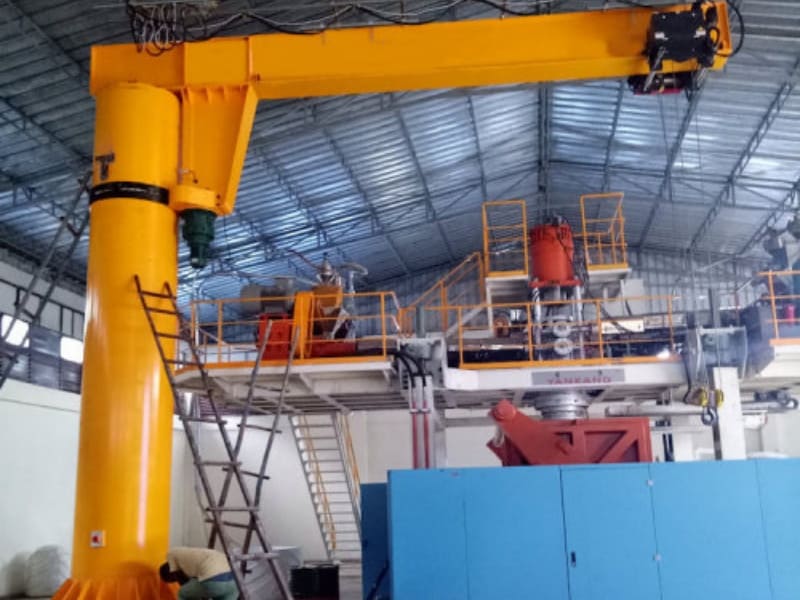
Column Structure: The column of a freestanding jib crane is typically made of Q235 or Q355 low-carbon steel plates, rolled and welded into a circular or square section. Wall thickness generally ranges from 8 to 16 mm, depending on load requirements. This robust structure ensures excellent vertical stability, especially for freestanding jib crane installations.
Jib Arm Design: Jib arms are available in hollow or box-type designs. Hollow structures, such as I-beams or channel steel, are lightweight and suitable for lighter applications like a 2 ton jib crane. Box-type arms offer higher strength and torsional resistance for heavier loads. All steel components are treated with anti-corrosion coatings to extend service life.
Rotation Mechanism: The slewing system usually consists of single-row or double-row ball bearings. Manual rotation is suitable for 2 ton jib cranes, while electric rotation with a geared motor is preferred for heavier or high-frequency operations, ensuring smooth and controlled movement.
Maintenance
Proper maintenance can extend the service life of a freestanding jib crane by 3 to 5 years. Daily inspections should focus on weld seams, bolts, and bearing lubrication. Periodic maintenance includes cleaning electrical cabinets, lubricating chains or wire ropes, and checking drive components. Well-maintained freestanding jib cranes can reduce annual repair costs by up to 60% and significantly minimize production interruptions.
Whether used in machining workshops, warehouses, or assembly areas, the pillar jib crane is a cost-effective and space-saving lifting solution. The freestanding jib crane offers outstanding flexibility, easy installation, and precise load handling. By selecting the right configuration and maintaining it properly, businesses can greatly improve operational efficiency, reduce labor intensity, and create a safer, more productive working environment.