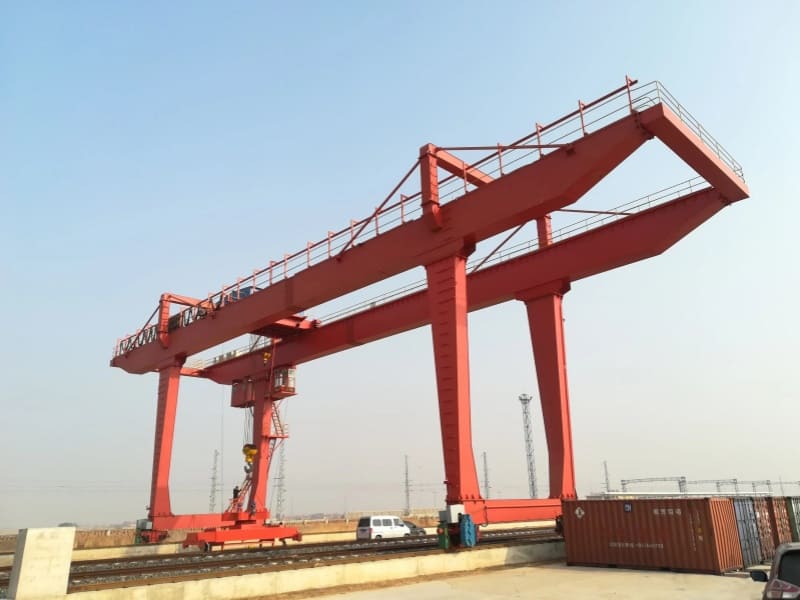
A container gantry crane is a critical piece of equipment in ports, container yards, and intermodal terminals. Its core structure—the gantry—acts as the crane’s backbone, combining height, span, and mobility to safely lift, transport, and position heavy containers. A well-designed container gantry crane must withstand not only static loads but also dynamic forces caused by acceleration, braking, wind pressure, and lifting impacts. Every structural member works together to transfer loads efficiently down to the foundation, ensuring long-term reliability and safe operation.
Successful container gantry crane design balances strength, stiffness, durability, and accessibility for maintenance. With proper engineering, routine inspection, and corrosion protection, the gantry structure can remain dependable even after years of high-intensity service.
Gantry Legs (Columns)
The legs, also known as columns, are the primary vertical load-bearing elements of a container gantry crane. They transfer the combined weight of the gantry girder, trolley, hoisting system, and lifted containers directly to the ground. Engineers typically use heavy-duty steel box sections or lattice-type columns to achieve high compressive strength while minimizing the risk of buckling.
To enhance structural stability, gantry crane legs are reinforced with internal stiffeners, gusset plates, and bracing systems. These components help control local buckling and efficiently transfer shear forces to the sill beams and foundation. The legs are anchored using bolted or grouted baseplates, ensuring a secure connection under both static and dynamic loading. Many heavy duty gantry crane legs also integrate access ladders, maintenance platforms, and cable routing channels to improve serviceability. Protective coatings and regular inspections are essential to extend service life in harsh port environments.
Sill Beams (Tie Beams)
Sill beams, sometimes referred to as tie beams, connect the legs at the base of the heavy duty gantry crane. These horizontal members form the lower frame and play a crucial role in resisting leg spreading, overturning forces, and torsional effects during asymmetric lifts or strong winds.
Typically fabricated from welded plate sections with internal stiffeners, sill beams distribute wheel or pad loads evenly into the foundation. They help the entire gantry act as a unified structural system rather than independent columns. In addition, sill beams often serve as mounting points for grounding systems, cable trays, and access walkways. Proper drainage design, joint sealing, and periodic weld inspections are vital to prevent corrosion and fatigue-related issues over time.
Gantry Girder
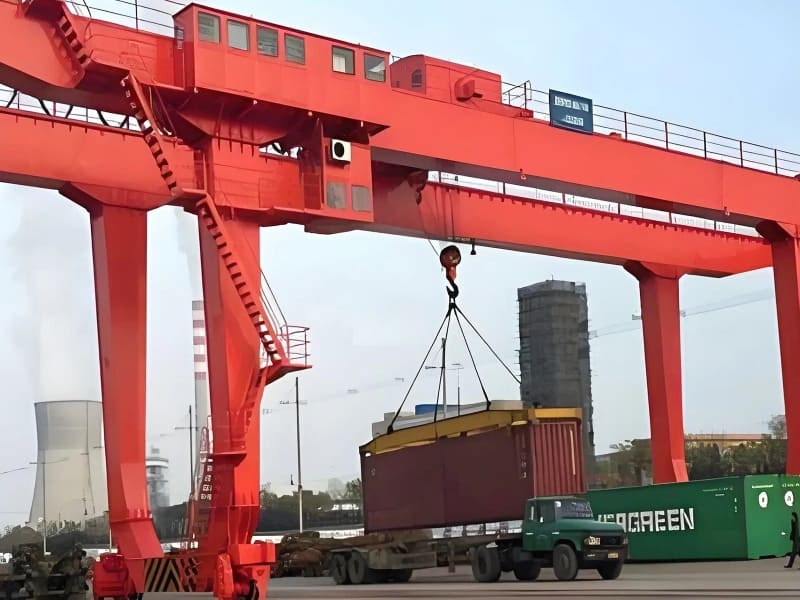
The gantry girder—also called the main girder or bridge girder—is one of the most critical components of a 50 ton gantry crane. It spans between the legs and supports the trolley and hoisting mechanism. Because it is subjected to significant bending moments and torsional loads, especially during off-center container lifts, the girder is usually designed as a box girder or welded plate girder.
Engineers carefully control deflection, camber, and fatigue life to ensure smooth trolley travel and precise container positioning. Rail seating on the girder must be accurately machined to minimize wear and vibration. The girder often incorporates walkways, fall-protection anchor points, and cable festoon systems, all of which contribute to safe operation and maintenance efficiency. A strong and stiff gantry girder directly influences the lifting capacity, cycle time, and accuracy of the container gantry crane.
Travel System
The travel system determines how a 50 ton gantry crane moves within the yard or terminal. Rail-mounted gantry cranes use steel wheel bogies running on fixed rails, offering high precision and efficiency for repetitive operations. These systems include motors, gearboxes, brakes, bearings, and anti-derail devices, all designed to handle heavy loads and frequent cycles.
Rubber tyred container gantry cranes (RTGs) provide greater operational flexibility. Equipped with heavy-duty tyres, steerable axles, and onboard power systems, RTGs can move freely across container yards. However, they require level ground conditions and more frequent tyre and steering maintenance. Both systems rely on advanced braking systems, limit switches, position feedback, and safety interlocks to ensure controlled and collision-free movement.
The structural design of a container gantry crane is fundamental to its performance, safety, and lifespan. From robust legs and sill beams to a high-strength gantry girder and reliable travel system, every component must be engineered to work together under demanding conditions. With proper design, maintenance, and corrosion protection, a container gantry crane can deliver stable, efficient, and safe container handling for decades of operation.