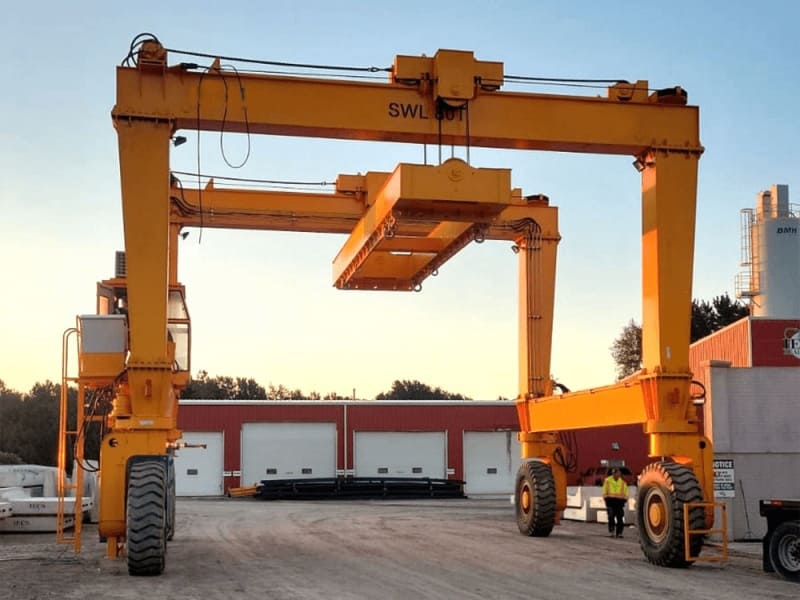
Rubber tyred gantry cranes are essential equipment in modern ports, container terminals, logistics yards, and cargo transfer facilities. Known for their high efficiency, flexibility, and operational safety, RTG cranes play a critical role in container loading, unloading, stacking, and transshipment. Their mobility and productivity make them a key solution for high-throughput logistics environments.
An RTG crane is a mobile gantry crane specifically designed for container handling operations. Unlike rail-mounted cranes, RTG cranes run on rubber tires, allowing them to move freely across various ground surfaces such as concrete and asphalt. This mobility enables operators to easily reposition the crane within container yards, improving workflow efficiency and reducing infrastructure costs.
The operation of a rubber tyred gantry crane relies on the coordinated performance of mechanical, electrical, and control systems. Its main structural components include the gantry frame, main beam, hoisting mechanism, traveling system, and intelligent control unit. During operation, the traveling mechanism enables smooth ground movement and accurate positioning, while the hoisting system lifts and lowers containers using an electric motor, drum, and wire rope assembly. Advanced electrical control systems ensure precise motion control, safety protection, and stable performance throughout all lifting cycles.
Features
♦Rubber Tire Mobility: RTG cranes are equipped with heavy-duty rubber tires that allow smooth travel across various ground surfaces, including concrete, asphalt, and gravel. This eliminates the need for fixed rail infrastructure and improves operational flexibility.
♦High Stacking Capability: Designed for efficient container storage, RTG cranes can stack containers in multi-level configurations, maximizing vertical space and increasing yard storage density while maintaining stable and safe handling.
♦Slewing and Rotational Movement: RTG cranes offer slewing or horizontal rotation capabilities, enabling precise container positioning and improved access to containers in different yard locations. This enhances productivity and operational accuracy.
♦Wide Spanning Capacity: With the ability to span multiple container rows, RTG cranes can handle several containers within a single working zone, reducing handling time and improving overall throughput in busy container terminals.
♦Electric and Hybrid Power Options: Modern RTG cranes can be powered by electric or hybrid systems, significantly reducing fuel consumption, emissions, and operating costs. This makes them an environmentally friendly choice for ports and logistics centers aiming to lower their carbon footprint.
♦Efficient and Reliable Performance: RTG cranes are engineered for continuous heavy-duty operation, offering smooth motion control, high handling efficiency, and dependable performance in demanding container yard environments.
Advantages
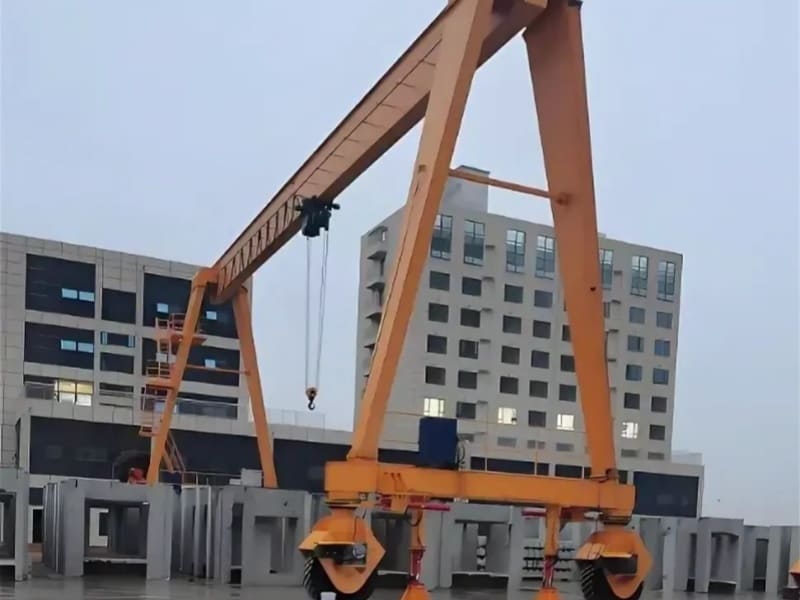
♦High Flexibility and Mobility: Heavy duty gantry cranes are equipped with rubber tires, allowing them to move freely across different yard surfaces such as concrete, asphalt, and compacted gravel. This mobility enables quick repositioning to adapt to changing operational layouts and workflow demands.
♦Efficient Container Handling: Designed for fast lifting, traveling, and stacking, heavy duty gantry cranes significantly reduce container handling time. Their smooth motion control and high travel speeds improve turnaround efficiency, helping terminals maintain high productivity even during peak operations.
♦Scalable for Different Operational Needs:The heavy duty gantry crane systems can be easily scaled to match varying container volumes and yard sizes. Whether handling small-scale operations or large, high-capacity terminals, RTGs can be configured to support growing or fluctuating workload requirements.
♦Environmentally Friendly Operation: Modern heavy duty gantry cranes can be powered by electric systems, hybrid drives, or energy-efficient engines, reducing fuel consumption and lowering carbon emissions. Electric RTGs, in particular, contribute to greener port operations and compliance with environmental regulations.
♦Cost-Effective Infrastructure: Unlike rail-mounted cranes, heavy duty gantry cranes do not require fixed track installations, reducing initial infrastructure investment. Their lower installation and maintenance costs make them a cost-efficient solution for container terminals and logistics hubs.
Rubber tyred gantry cranes are designed with liftable and adjustable axles, allowing operators to position the crane accurately for efficient container stacking and transportation. Advanced automation and control systems can be integrated to ensure precise container alignment during loading and unloading, improving operational accuracy while maintaining strict safety standards for operators.
Modern RTG systems may also incorporate simulation and monitoring technologies that provide real-time performance feedback. These intelligent features support equipment optimization, operator training, and preventive maintenance, contributing to more reliable and technologically advanced crane operations.
RTG cranes play a vital role in intermodal logistics by enabling seamless container transfers between trucks, trailers, and railcars. This capability supports smooth cargo movement across domestic and international supply chains. Available in multiple configurations, including mobile gantry and straddle-style designs, RTGs offer flexible solutions for high-efficiency container handling and inspection processes in modern logistics environments.