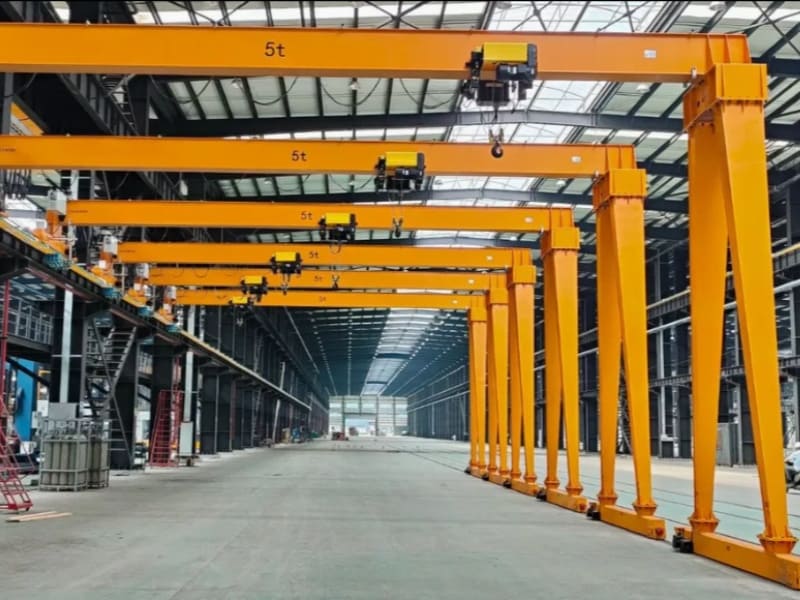
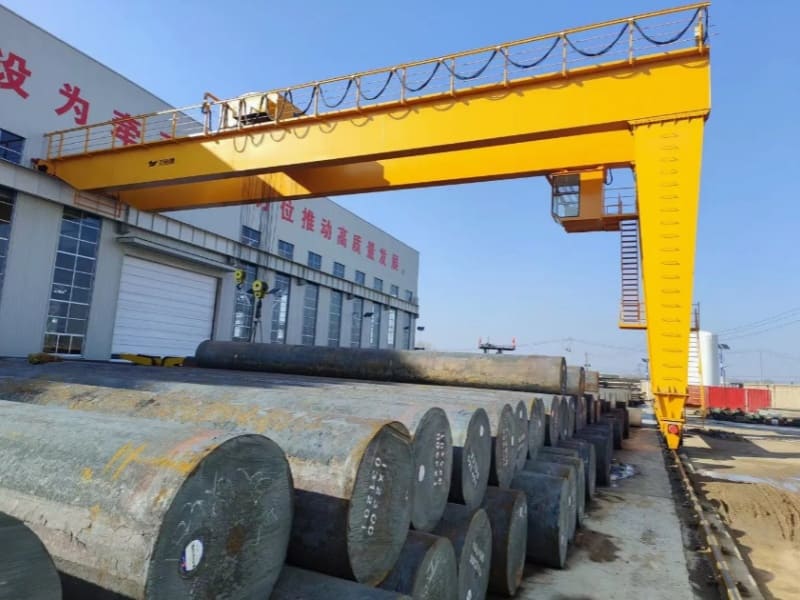
A semi gantry crane is a versatile lifting solution that combines the advantages of both overhead cranes and gantry cranes. One side of the crane is supported by a ground-mounted rail through a leg structure, while the other side runs on an elevated runway beam attached to the building structure, such as workshop columns or supporting brackets. This unique design allows the crane to operate efficiently in facilities where installing a full gantry crane may not be practical due to limited space or structural constraints.
Because only one side of the crane requires a ground rail, the semi gantry crane helps save valuable floor space and reduces the need for extensive infrastructure. It is particularly suitable for workshops, warehouses, and production lines where materials need to be transported along one side of the building while keeping the working area open and accessible. The crane can move smoothly along its track while the hoisting mechanism lifts and positions loads accurately, ensuring efficient material handling.
The main structure of a semi gantry crane is typically manufactured from high-strength steel, ensuring excellent load-bearing capacity and long-term durability. Combined with a precise transmission system and reliable control equipment, the crane provides stable and efficient lifting performance. It is widely used for handling machinery parts, steel materials, and other heavy loads, helping companies improve operational efficiency and optimize their production and logistics processes.
Key Differences Between Gantry Cranes and Semi-Gantry Cranes
1. Structural Design and Configuration
A traditional gantry crane is supported by two legs that run on rails installed on the ground, forming a complete portal structure. This design allows the crane to move freely across large areas such as container yards, shipyards, or outdoor storage spaces. In contrast, a semi-gantry crane has a hybrid structure. One side of the crane is supported by a ground rail with a leg, while the other side runs on an elevated runway beam attached to the building structure. This design reduces the need for ground space and makes it suitable for indoor or partially covered facilities.
2. Lifting Capacity and Span
Gantry cranes are generally designed for larger spans and heavier lifting capacities. They are commonly used in industries that require handling extremely heavy loads, such as shipbuilding, large-scale steel processing, and port logistics. Semi-gantry cranes typically have a moderate lifting capacity and are better suited for medium-duty applications. Although they can still handle heavy materials, their main advantage lies in efficient material handling within more confined working environments.
3. Application Scenarios
Full gantry cranes are widely used in outdoor environments such as ports, railway freight terminals, construction sites, and large storage yards where wide coverage and heavy lifting are required. Single leg gantry cranes are more commonly installed in factory workshops, warehouses, and production lines, where one side of the building structure can support the crane system. They are ideal for facilities that need efficient lifting equipment but have limited installation space.
4. Installation and Infrastructure Requirements
Because gantry cranes require rails on both sides of the working area, they often need a more extensive runway infrastructure and larger installation space. Single leg gantry cranes, however, only require a ground rail on one side, while the other side uses an existing building structure for support. This reduces construction work, installation time, and overall project cost.
5. Flexibility and Cost Efficiency
While gantry cranes are highly versatile for heavy-duty outdoor operations, single leg gantry cranes offer a more cost-effective and space-saving solution for indoor material handling. Their flexible design allows them to be customized with various lifting mechanisms and accessories, making them suitable for different industrial applications while maintaining lower infrastructure costs.
Single leg gantry cranes provide an efficient lifting solution for workplaces where space is limited or where installing a full gantry crane is unnecessary. Their unique design, with one side supported by a ground rail and the other running on an elevated runway beam, allows them to operate smoothly in narrow areas or low-clearance environments. By combining the advantages of overhead cranes and traditional gantry cranes, semi gantry cranes offer a compact structure, reliable lifting performance, and a more economical installation solution.
Our semi gantry crane systems are designed to adapt to a wide range of industrial environments. By carefully analyzing each customer’s workshop layout, production flow, and material handling requirements, we provide customized solutions that ensure stable and efficient operation. Whether installed in factory workshops, warehouses, or outdoor storage areas, these cranes help improve handling efficiency while reducing installation costs and maximizing the use of available space.