
Workshop Roof Top Running Bridge Crane for Safe Industrial Use
Overview
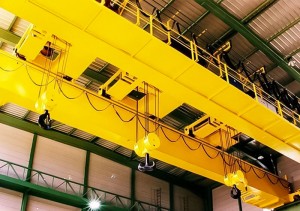
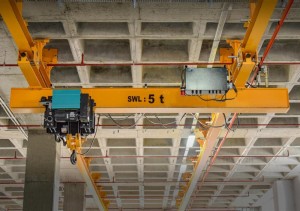
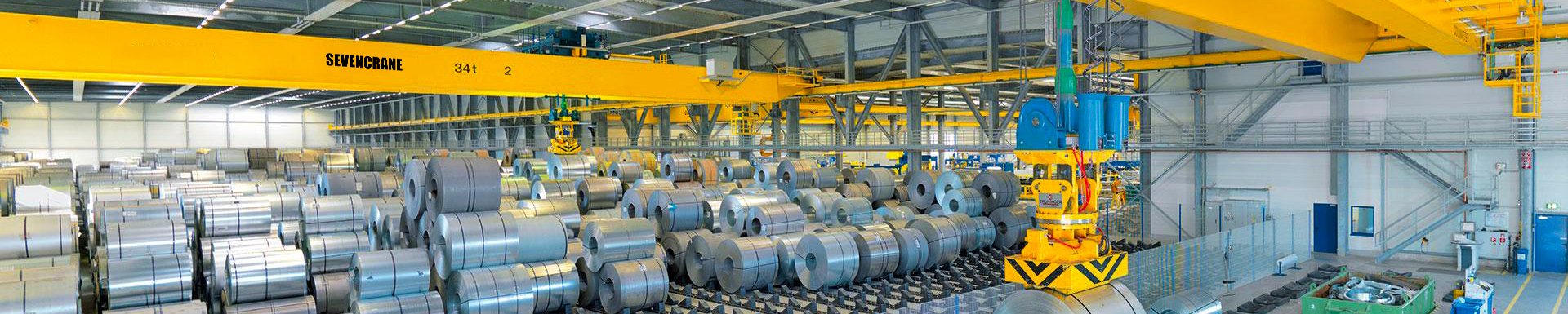
A top running bridge crane is one of the most widely used types of overhead cranes due to its versatility and strong load-handling capability. It is commonly applied across a wide range of industries, including manufacturing, warehouses, workshops, and heavy fabrication facilities. These cranes can be designed with lifting capacities of up to 32 tons and spans reaching 35 meters, while most standard applications typically fall within the 5–10 ton capacity range. For lighter capacities, I-beam girders are often used, whereas larger spans and higher capacities generally require robust box girder structures for improved strength and stability.
In a top running configuration, the hoist and trolley are underhung, traveling along the bottom flange of the bridge girder. While this design ensures smooth and reliable lifting, it does require more vertical space, making it less suitable for buildings with strict headroom limitations.
Top running bridge cranes travel on end trucks mounted on rails fixed to the top of runway beams. These runways can be either building-supported or freestanding, depending on site conditions. Although highly efficient, hook coverage is limited to the runway area, as the trolley cannot move beyond it.


Safety Tips
♦Qualified Operator Training: Safe crane operation begins with well-trained personnel. Operators should receive professional training and obtain the necessary certifications before using a top running bridge crane. Training should cover load handling, control functions, emergency procedures, and awareness of site-specific risks. Regular refresher training is also recommended to keep operators up to date with safety standards and best practices, ensuring consistent and efficient operation.
♦Routine Inspection: Regular inspection and maintenance are essential to maintain safe and reliable crane performance. Daily pre-operation checks should include wire ropes, hooks, brakes, limit switches, and control systems. In addition, periodic professional inspections should be carried out in accordance with the manufacturer’s recommendations and local regulations. Proper lubrication, timely replacement of worn components, and accurate record-keeping help prevent unexpected failures and extend the crane’s service life.
♦Correct and Responsible Use: Top running bridge cranes must always be operated within their rated load capacity and designed working conditions. Never overload the crane or use it for unintended purposes. Ensure loads are properly balanced, secured, and lifted smoothly to avoid sudden movements or swinging. Clear communication between operators and ground personnel is critical, and the working area should remain free of obstacles to minimize the risk of accidents and equipment damage.


FAQ
What is the main difference between top running and under-hung bridge cranes?
The primary difference lies in how the crane travels along the runway. A top running bridge crane operates on rails installed on top of the runway beams, allowing it to carry heavier loads and span wider distances. In contrast, an under-hung bridge crane runs on rails attached to the bottom flange of the runway beams. This design is more space-efficient and suitable for lighter loads, especially in facilities with limited structural capacity.
Are under-hung bridge cranes suitable for heavy-duty operations?
Under-hung bridge cranes are generally designed for light to medium-duty lifting applications. Their load capacity is limited by the building structure and runway design. For frequent lifting of heavy loads or demanding industrial environments, a top running bridge crane is the more reliable and robust choice.
How can I determine the right crane capacity for my facility?
To select the correct crane capacity, evaluate the heaviest load you expect to lift, including any lifting devices or attachments. It is important to choose a crane with sufficient safety margin to handle peak loads safely and efficiently.
Is specialized operator training necessary?
Yes. All crane operators should receive professional training and proper certification. This ensures safe operation, reduces accident risks, and improves overall productivity.
How often should bridge cranes be inspected and maintained?
Routine inspections and scheduled maintenance should always follow the manufacturer’s recommendations and relevant safety standards to ensure long-term reliability and safe operation.