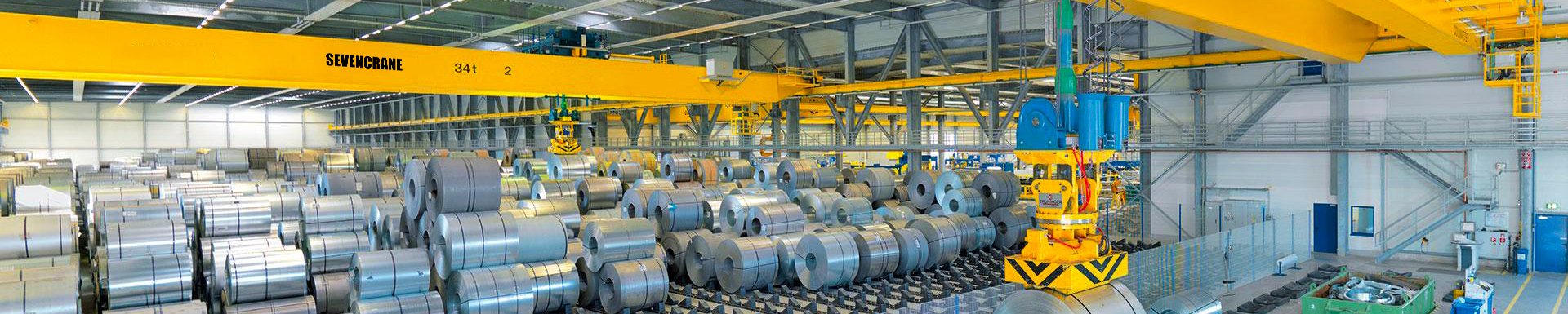

45 Ton Rail Mounted Gantry Crane for Container Stacking
Overview
Rail mounted gantry crane is a heavy-duty lifting equipment widely used in container terminals, railway freight yards, logistics centers, ports, shipyards, and large outdoor storage areas. It is mainly designed for container loading, unloading, stacking, and transferring operations, helping improve cargo handling efficiency and reduce labor costs in modern material handling systems.
The crane adopts a robust double girder portal frame structure with excellent load-bearing capacity and stable operation performance. Its main components include the main girder, gantry legs, hoisting mechanism, trolley traveling mechanism, crane traveling mechanism, electrical control system, and operator cabin. To meet the requirements of container handling operations, the gantry legs are usually designed with a large clearance and U-shaped structure, allowing trucks and containers to pass smoothly through the working area.
Manufactured with high-strength steel materials and advanced production technology, the rail mounted gantry crane offers excellent resistance to wear, deformation, and harsh outdoor environments. The equipment operates smoothly with low vibration and can maintain reliable performance during continuous heavy-duty operations.
According to different project requirements, the crane can be customized in terms of lifting capacity, span, lifting height, working speed, and control system. SEVENCRANE can also provide tailored solutions for special operating conditions to help customers achieve safer, more efficient, and more economical material handling operations.


Advantages
♦Strong Structure: The gantry crane on rails adopts a robust portal frame structure with excellent rigidity and stability. Manufactured with high-strength steel materials, the crane can withstand heavy loads and continuous operation in demanding working environments. The stable structural design effectively reduces deformation and vibration during lifting, ensuring safer and more reliable material handling operations.
♦Smooth Operation: Equipped with advanced variable frequency drive (VFD) control technology, the crane achieves smooth starting, accurate positioning, and stable traveling performance. The hoisting, trolley traveling, and crane traveling mechanisms operate with minimal impact and reduced shaking, helping improve work efficiency while reducing mechanical wear and energy consumption.
♦Comprehensive Safety: To ensure safe operation, the gantry crane on rails is equipped with a complete range of safety protection devices. These include overload limiters, lifting height limit switches, emergency stop systems, buffers, and anti-collision devices. The integrated safety system can effectively reduce operational risks, protect personnel and cargo, and improve the reliability of the entire lifting process.
♦Flexible Design: The gantry crane on rails can be configured in different structural forms according to project requirements, including single girder gantry crane, double girder gantry crane, and semi-gantry crane designs. This flexibility allows the equipment to adapt to various applications such as container handling, steel processing, logistics transportation, shipyard operations, and warehouse material transfer.
♦Adaptable Environment: The gantry crane on rails can be customized for different working conditions and harsh environments. Optional solutions are available for outdoor operation, high-temperature workshops, dusty environments, corrosive coastal areas, and explosion-proof applications. Customized configurations help ensure stable and efficient performance under special operational requirements.
♦International Standards: The gantry crane on rails design, manufacturing, and quality control processes comply with multiple international standards such as FEM, CMAA, ISO, and CE requirements. Strict quality inspection and testing procedures ensure reliable product performance, long service life, and stable operation for customers worldwide.


How to Customize a RMG Crane
♦Lifting Capacity: Please provide the maximum lifting weight required for your operation. The lifting capacity is one of the most important parameters, as it directly affects the crane structure, hoisting mechanism, motor selection, and safety configuration.
♦Span Length: The span refers to the distance between the centerlines of the rails. This measurement determines the overall size and structural strength of the crane. Accurate span information helps ensure smooth traveling performance and stable operation.
♦Lifting Height: Please specify the required lifting height from the ground to the hook center. Different lifting heights influence the design of the main girder, hoisting system, and steel structure, especially for container handling or large outdoor working environments.
♦Rail Information: Kindly confirm whether the rails have already been installed on site. If not, SEVENCRANE can also provide matching rail systems and accessories. Please additionally provide the required rail length for complete project planning.
♦Power Supply: Please inform us of your local power supply voltage and frequency, such as 380V/50Hz/3Phase or other standards. This information is necessary for selecting suitable motors, electrical components, and control systems.
♦Working Environment: Please describe your working conditions, including the type of materials being lifted, operating frequency, ambient temperature, humidity, dust levels, or corrosive environments. These factors help us choose appropriate materials, coatings, and protective configurations.
♦Site Drawing or Photos: If possible, please share workshop drawings, layout plans, or site photos. Visual information allows our engineering team to better understand the installation environment, optimize the crane design, and avoid potential operational limitations on site.