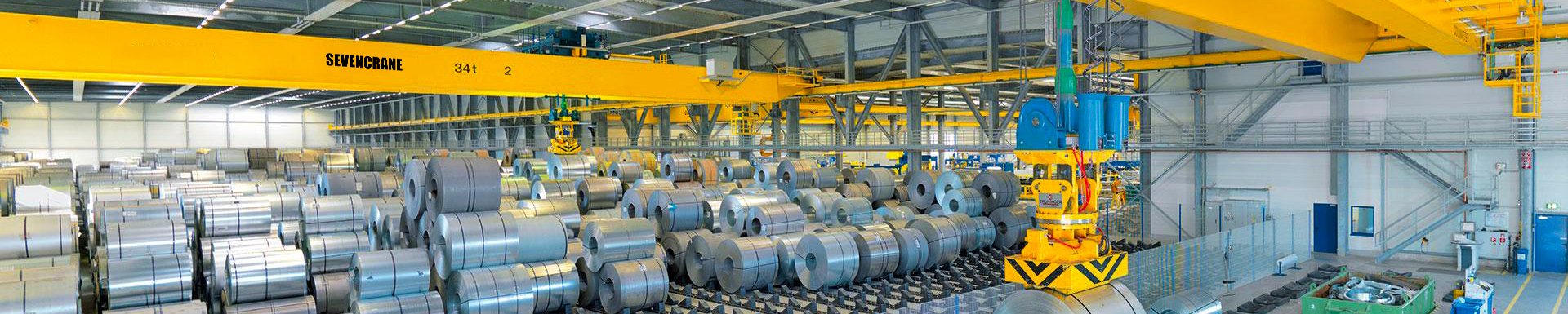

Available Single Girder Overhead Crane for Concrete Structure Workshop
Compositions
♦Bridge (Main Girder): The bridge is the primary load-bearing structure that spans across the working area and connects the runway beams. In a single girder overhead crane, it typically consists of one main beam made from rolled steel or a welded box girder design. This structure supports the trolley and hoisting system, allowing them to move smoothly along the length of the crane.
♦Trolley & Hoisting Mechanism: The trolley is a movable unit that travels along the main girder and carries the hoisting mechanism. The hoist is responsible for lifting and lowering loads, using a combination of motor-driven systems, pulleys, and wire ropes. This integrated system ensures efficient and controlled vertical lifting operations.
♦Hoist Drum & Wire Rope: The hoist drum plays a key role in lifting operations by winding and unwinding the wire rope. High-strength steel wire ropes are used to ensure durability and safety under load. This system enables precise vertical movement and reliable load handling over time.
♦Trolley Drive System: The trolley is powered by an electric motor that allows it to move horizontally along the girder. This ensures accurate positioning of the load, enabling operators to place materials exactly where needed with minimal effort.
♦End Trucks (End Carriages): Located at both ends of the bridge, the end trucks support the entire crane and allow it to travel along the runway rails. Depending on the bridge crane capacity, they are equipped with multiple wheels to ensure stability, smooth movement, and balanced load distribution.
♦Lifting Attachments: The single girder overhead crane can be equipped with different lifting tools depending on the application. Standard hooks are used for general lifting tasks, while grab buckets are suitable for bulk materials. Other specialized attachments can also be provided to meet specific operational requirements.
♦Control System: The single girder overhead crane can be operated באמצעות pendant control, remote control, or cabin control systems. These controls manage all crane movements, including hoisting and traveling. Variable Frequency Drives (VFDs) can be integrated to achieve smooth speed control and precise positioning.
♦Power Supply System: Power is supplied through conductor bars, festoon cable systems, or cable reels. These systems ensure stable and continuous electrical supply for safe and efficient crane operation.


Features
♦Lightweight & Space-Saving Design
The single girder overhead crane features a compact and lightweight structure, allowing it to maximize the use of available workshop space. Its optimized design reduces the load on building structures while maintaining excellent lifting performance. This makes it especially suitable for facilities with limited headroom or space constraints, helping improve overall layout efficiency.
♦High-Quality Steel Construction
Manufactured using premium-grade steel, the single girder overhead crane offers strong structural integrity and long-term durability. The main components are treated with anti-corrosion coatings, ensuring reliable performance even in demanding environments such as workshops, warehouses, and light industrial plants. This robust construction minimizes deformation and enhances the crane’s service life.
♦Stable Operation & Precise Positioning
Equipped with standardized and well-matched components, the crane delivers smooth and stable operation during lifting, traveling, and positioning. Its precise control system allows for accurate load handling, reducing swing and improving safety. The efficient movement and quick positioning capabilities significantly enhance working efficiency and productivity.
♦Easy Maintenance & Cost Efficiency
The simplified structure of the single girder overhead crane makes installation, inspection, and maintenance straightforward. Key components are easily accessible, reducing downtime during servicing. In addition, lower installation requirements and reduced maintenance needs help minimize overall operating costs, making it a highly economical solution for long-term use.


Advantages
♦Cost-Effective Solution: The single girder design uses fewer materials and a simpler trolley system, which significantly reduces manufacturing and transportation costs. Installation is also faster and less complex, helping to lower overall project expenses. This makes it an ideal choice for businesses seeking an economical lifting solution.
♦Ideal for Light to Medium Duty: Single girder overhead cranes are perfectly suited for light to medium-duty applications. They provide reliable performance for routine material handling tasks without the higher cost associated with heavy-duty crane systems.
♦Reduced Structural Load: Due to their lighter dead weight, these cranes impose less stress on building structures and foundations. In many cases, they can be installed using existing roof beams without the need for additional support columns, reducing construction requirements.
♦Improved Hook Coverage: The design allows for better hook approach in both bridge and trolley travel directions. This means the single girder overhead crane can utilize more of the available working area, improving operational efficiency and material handling flexibility.
♦Easy Installation & Maintenance: With a straightforward structure and fewer components, single girder cranes are easier to install, inspect, and maintain. This reduces downtime and simplifies long-term servicing.
♦Wide Application Range: These cranes are widely used in workshops, warehouses, material yards, and manufacturing facilities. Their versatility makes them suitable for a variety of industries and lifting tasks.
♦Lower Wear and Tear: The lighter load on runway beams and rails results in less wear on structural components and end truck wheels. This extends the service life of the crane system and reduces maintenance costs over time.
♦Suitable for Low Headroom: Single girder overhead cranes are well-suited for facilities with limited vertical space. Their compact design allows for efficient lifting operations even in low headroom environments.
-

Electric Overhead Crane Single Girder with LE M...
-

Custom Underhung Bridge Crane for Small Worksho...
-

Warehouse Specialized Single Girder Overhead Cr...
-

Lifting Equipment Single Girder Overhead Crane ...
-
Indoor 1T 2T 3T Underhung Bridge Crane With Ele...
-

Workshop Application Double Girder Overhead Cra...