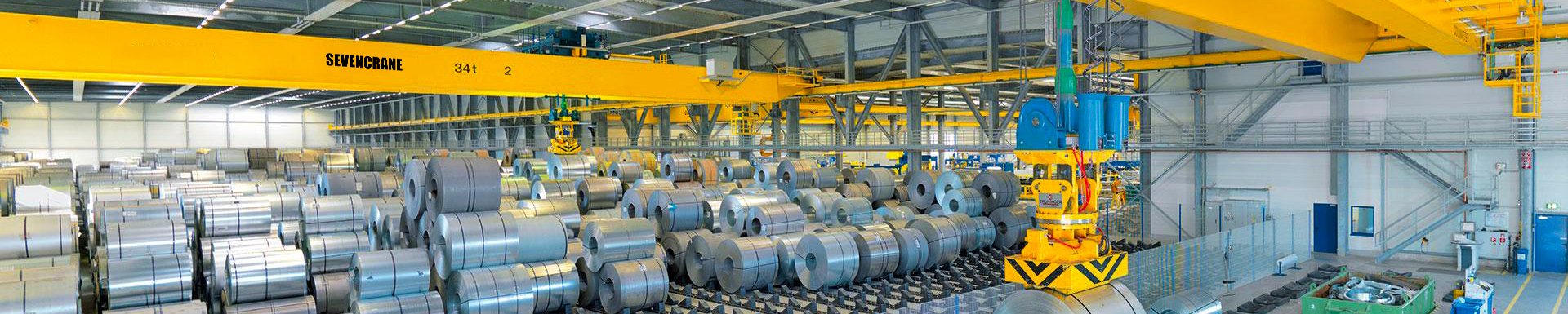

Factory Price Double Girder Gantry Crane for Large Container Handling
Classification of Double Girder Gantry Crane by Structural Design
Double girder gantry cranes can be categorized into different types based on the structural form of the main girder and supporting legs. The most common types include box-type gantry cranes, truss girder gantry cranes, and L-type gantry cranes. Each design offers unique advantages for specific working environments and lifting requirements.
♦Box-type Gantry Crane
The box-type gantry crane uses a rectangular box-shaped girder structure composed of two webs and two flanges. Compared with traditional I-beam designs, this structure provides significantly higher rigidity and load-bearing capacity. It also has excellent resistance to bending and buckling, making it highly suitable for heavy-duty applications. This type of crane is widely used in demanding industrial environments such as steel plants, manufacturing workshops, outdoor storage yards, and ports. It can be configured with various control systems, lifting mechanisms, and safety devices to meet different operational requirements.
♦Truss Girder Gantry Crane
The truss girder gantry crane adopts a triangular lattice structure formed by interconnected steel rods. This lightweight yet strong design offers good stability and excellent wind resistance, which makes it especially suitable for outdoor applications. Due to its reduced self-weight, it is more economical for large-span and medium-to-heavy lifting tasks. It is commonly used in construction sites, railway yards, shipyards, and ports, particularly for handling long steel materials and prefabricated components in windy environments.
♦L-type Gantry Crane
The L-type gantry crane is characterized by its L-shaped supporting legs, which provide increased clearance and working space beneath the crane. This design improves maneuverability when handling long or bulky materials. It is particularly suitable for freight yards, logistics centers, and seaport terminals where efficient loading and unloading operations are required. The L-type structure also enhances stability while allowing better adaptation to site constraints where overhead cranes cannot be installed.


Advantages of Double Girder Gantry Crane
The double girder gantry crane is widely recognized for its strong structure, high performance, and adaptability to heavy-duty industrial applications. Compared with single girder systems, it offers significant improvements in lifting capacity, stability, and operational efficiency.
♦High Lifting Capacity
The double girder structure is specifically engineered to handle extremely heavy loads with ease. It is suitable for lifting large machinery, steel components, prefabricated structures, and other oversized materials. This makes it an ideal solution for industries requiring frequent heavy-duty lifting operations, such as shipbuilding, metallurgy, and large-scale construction projects.
♦Enhanced Stability and Durability
With two main girders working together, the crane provides superior structural rigidity and reduced deformation under load. This design significantly improves operational safety and extends service life, even in harsh or continuous working environments. Its robust construction ensures reliable performance under high-intensity workloads.
♦Wide Working Span and Coverage
Double girder gantry cranes are capable of covering large working areas, making them highly suitable for expansive sites such as shipyards, railway yards, warehouses, and outdoor storage areas. The wide span design allows efficient material handling across multiple work zones, reducing the need for additional equipment.
♦Highly Customizable Configuration
These cranes can be tailored to meet specific operational requirements. Options include different lifting capacities, span lengths, lifting heights, working speeds, and control systems. Additional features such as specialized hoists or automation systems can also be integrated based on project needs.
♦Advanced Safety Protection Systems
To ensure safe operation, the crane is equipped with multiple safety features, including overload protection, limit switches, emergency stop functions, and optional anti-sway technology. These systems help prevent accidents and improve operational control during lifting tasks.
♦Convenient Maintenance and Serviceability
The design of the double girder gantry crane emphasizes accessibility, allowing for easier inspection, maintenance, and part replacement. This reduces downtime and helps maintain long-term operational efficiency.


Safety Devices of Double Girder Gantry Crane
To ensure safe, stable, and reliable operation in heavy-duty working environments, the double girder gantry crane is equipped with multiple advanced safety protection systems. These devices work together to minimize operational risks, prevent equipment damage, and protect both operators and materials during lifting operations.
♦Crane Traveling Limit Switch
The traveling limit switch is installed to control the crane’s movement range along the runway rails. It automatically stops the crane when it reaches the preset end positions, preventing overtravel and reducing the risk of collisions or structural damage.
♦Weight Overload Protection System
This system continuously monitors the lifted load and prevents operations when the weight exceeds the rated capacity. If an overload condition is detected, the system immediately triggers an alarm and stops lifting actions, ensuring safe working conditions and protecting the crane structure from excessive stress.
♦Emergency Stop System
The emergency stop function allows operators to immediately halt all crane operations in case of abnormal situations or emergencies. This system provides a quick response mechanism to prevent accidents and ensure operator safety.
♦Voltage Loss Protection Function
In the event of sudden power failure or voltage drop, this protection system automatically cuts off unsafe operations and prevents unexpected restarts when power is restored. It helps maintain operational stability and avoids accidental movements.
♦Current Overload Protection System
This device monitors electrical current levels during operation. If abnormal current fluctuations or overloads occur, it automatically shuts down the system to prevent motor damage and electrical faults, extending the lifespan of key components.
♦High-Quality Polyurethane Buffer System
Durable polyurethane buffers are installed at travel ends to absorb impact energy when the crane reaches terminal positions. These buffers reduce mechanical shock, protect structural components, and improve overall operational safety and smoothness.
-
150 Tons Storage Yard Goliath Gantry Crane Manu...
-

Box Type Double Girder Gantry Crane with Safety...
-

25 Ton Double Girder Gantry Crane for Steel Pro...
-

Universal Lifting and Travelling Double Girder ...
-
35 Ton Heavy Duty Travelling Double Girder Gant...
-

Good Quality Double Girder Gantry Crane for Com...