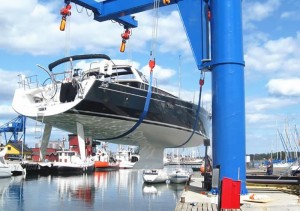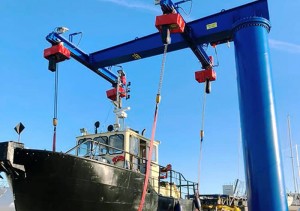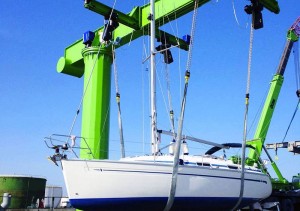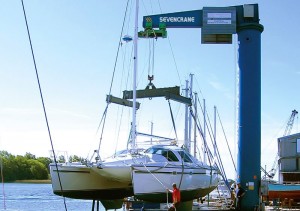

High Flexibility Lifting Equipment Marine Jib Crane with Remote Control
Operational Features and Safety Mechanisms
Power & Drive Options: A boat jib crane can be equipped with either a manual or motorized drive system. Manual operation is suitable for light-duty tasks or locations with limited power supply. Motorized systems, powered by electric drives, offer higher efficiency, smoother movement, and easier handling for heavier marine lifting operations.
Control & Remote Operation: Flexible control modes are available, including pendant control, cabin control, and wireless remote control. Remote operation allows the operator to control lifting, lowering, and slewing from a safe distance, greatly improving safety and positioning accuracy in marine environments.
Overload Protection Systems: Advanced overload protection devices are integrated to prevent the crane from lifting beyond its rated capacity. Once overload is detected, the system automatically stops lifting to protect both the equipment and personnel.
Weather Resistance Design: The boat jib crane is built for harsh outdoor marine conditions. Anti-corrosion coatings, sealed electrical enclosures, and weatherproof components protect the crane from rain, salt spray, and strong winds.
Maintenance & Inspection Requirements: Regular inspection, lubrication, and cleaning of anti-corrosion parts are essential. Preventive maintenance ensures long-term reliability, safe operation, and extended service life.


Customization and Flexibility
Tailored Design for Industrial Applications
Our free standing boat jib crane can be fully customized to meet specific industrial and marine lifting requirements. Key parameters such as lifting capacity, boom configuration, and operating mode can be adjusted to suit different working conditions, ensuring optimal performance in each application.
Adjustable Boom Length & Slewing Range
The boom length can be modified to reach designated working areas or suit special load-handling needs. Rotation angles may be customized for full 360°slewing or limited-angle operation, allowing the crane to adapt to restricted or complex workspaces.
Flexible Mounting & Foundation Options
Mounting configurations can be designed based on site conditions, including reinforced base plates, embedded anchor bolts, or dedicated concrete foundations. This ensures secure installation while maximizing available space.
Enhanced Protection for Harsh Environments
For hazardous or corrosive environments, the boat jib crane can be equipped with explosion-proof motors, marine-grade electrical systems, and advanced anti-corrosion coatings. These features ensure long-term safety, reliability, and stable operation under extreme conditions.
Future Upgrade Capability
The modular structure allows for future upgrades such as remote control, monitoring systems, and automation integration without major structural changes.


Installation, Maintenance & Troubleshooting of Boat Jib Crane
Site Preparation & Foundation Work: Before installing a boat jib crane, the site must be properly prepared with a solid, level foundation capable of withstanding both the crane’s self-weight and operational loads. The foundation should be constructed strictly according to engineering drawings to ensure stability, safe load distribution, and long-term structural reliability.
Crane Assembly & Commissioning: All main components, including the mast, boom, and hoist system, must be assembled according to the manufacturer’s guidelines and safety standards. After installation, comprehensive testing under both no-load and rated-load conditions should be carried out to confirm safe and smooth operation before the crane is officially put into service.
Routine Inspection & Cleaning: Regular inspections help identify wear, loose fasteners, or early signs of damage. The crane should also be kept clean to prevent dust, salt, and debris accumulation that can accelerate corrosion, especially in marine environments.
Lubrication & Scheduled Servicing: Moving parts must be lubricated at recommended intervals to ensure smooth operation and reduce mechanical wear. Periodic servicing by qualified technicians is essential for maintaining performance and operational safety.
Troubleshooting Common Issues: For operational failures, check the power supply, control system, and electrical connections. Corrosion should be addressed by repairing protective coatings and replacing damaged parts. Mechanical problems require alignment checks, proper lubrication, and reference to technical manuals for corrective action.