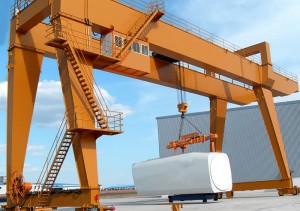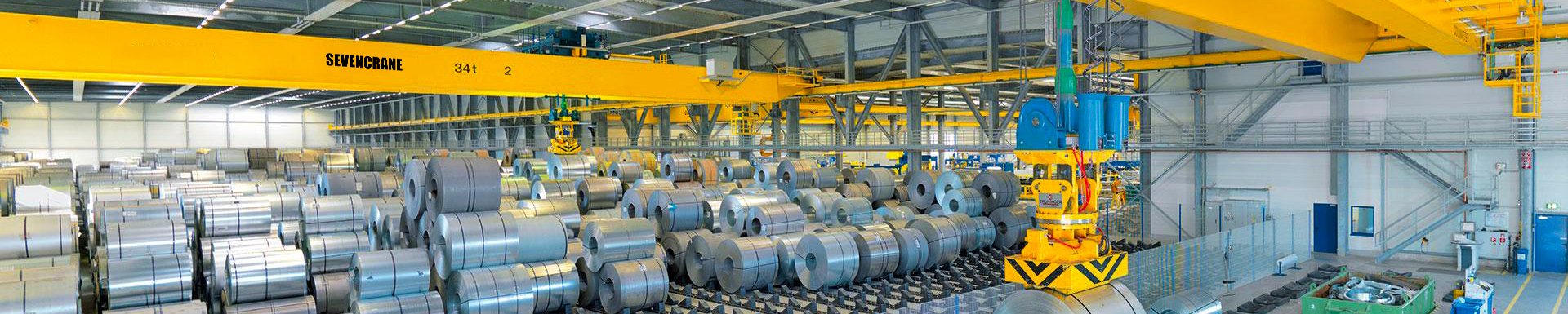

High Safety Rail Mounted Gantry Crane for Heavy Industry
Overview
A Rail Mounted Gantry Crane (RMG) is a heavy-duty lifting system widely used in large-scale industrial environments such as ports, railway freight terminals, container yards, and shipping facilities. Mounted on fixed rails, this type of crane can travel smoothly along a predetermined path, allowing it to cover large working areas with high precision. RMG cranes are commonly used for handling containers, heavy equipment, steel materials, and bulk cargo. With their strong lifting capacity and stable structure, they are ideal for loading, unloading, stacking, and transporting heavy materials in demanding industrial operations.
One of the key features of a rail mounted gantry crane is its ability to move efficiently along the entire length of the rail system. This allows the crane to serve a wide working zone while maintaining precise positioning and stable load handling. Because of its fixed track design, the crane can repeatedly perform lifting operations with consistent accuracy, which is particularly important in logistics centers and container terminals where efficiency and reliability are critical.
Compared with mobile gantry cranes, rail mounted gantry cranes offer greater stability and higher load-bearing capacity. Their robust structure and advanced control systems enable safe operation even when handling very heavy loads. In container yards, these cranes are widely used to stack and transfer containers, while in shipyards they can assist with lifting large hull components and heavy equipment. With their durability, efficiency, and precise operation, rail mounted gantry cranes are an excellent solution for large-scale material handling tasks.


Main Components of a Rail Mounted Gantry Crane
♦Gantry Frame: The gantry frame is the main structural component of the rail mounted gantry crane and provides the overall support for the entire system. It typically consists of two strong vertical legs connected by a horizontal main beam, forming a stable portal structure. The frame is designed to withstand heavy loads and maintain stability during lifting operations. Mounted on rails, the gantry frame allows the crane to travel smoothly across large working areas such as container yards, storage facilities, or industrial sites. Its robust steel structure ensures reliable performance even under demanding working conditions.
♦Hoist Trolley: The hoist trolley is responsible for lifting and transporting loads along the main beam. It moves horizontally across the beam while the hoisting mechanism raises or lowers the load. The trolley can be equipped with different lifting attachments depending on the application, including hooks, magnets, or grab buckets. This flexibility allows the crane to handle a wide variety of materials, such as containers, steel products, bulk materials, or heavy machinery components.
♦End Carriages: End carriages are installed at the bottom of the gantry legs and play an important role in supporting the crane’s traveling movement. They are equipped with durable wheels that run along the ground rails, enabling the crane to move forward and backward across the working area. The end carriage assembly typically includes drive motors, gear systems, and wheel sets, which ensure smooth and stable crane travel even when carrying heavy loads.
♦Electrical System: The electrical system provides the power and control required for the crane’s operation. It includes key components such as electric motors, power cables, control panels, and protection devices. The motors drive the hoisting, trolley travel, and gantry travel movements, while the cables deliver electrical power to these systems. The control panel allows operators to manage the crane’s functions safely and efficiently.
♦Control and Safety Systems: Rail mounted gantry cranes are equipped with advanced control and safety systems to ensure reliable operation. Operators can control the crane using cabin controls, pendant controls, or wireless remote systems depending on the working environment. Safety features such as limit switches, overload protection devices, emergency stop systems, and travel limiters help prevent equipment damage and ensure safe handling of heavy loads during operation.


Key Features of Rail Mounted Gantry Crane
♦High Operational Efficiency: Gantry cranes on rails are designed to improve container handling efficiency through advanced automation systems. The integrated container tracking and positioning system allows operators to move and stack containers more accurately and quickly. This automation significantly reduces manual intervention and labor intensity while maintaining a high level of operational safety.
♦Advanced Anti-Sway Technology: To ensure stable and precise load handling, the crane is equipped with an advanced frequency conversion anti-sway system. By analyzing factors such as container weight, lifting height, and wire rope length, the system controls the torque of the anti-sway motors to stabilize the spreader in two directions. This technology effectively minimizes load swing during lifting and traveling, which improves operational efficiency and accuracy.
♦Intelligent Speed Control System: The crane adopts an intelligent deceleration system that allows smooth acceleration and braking during operation. This feature reduces mechanical impact and vibration when the crane starts or stops moving, helping to extend the service life of key components and ensuring stable equipment performance.
♦Deviation Correction Technology: Gantry cranes on rails are equipped with an intelligent deviation correction system for the traveling mechanism. This technology helps prevent the “track biting” phenomenon, where wheels press unevenly against the rails. By maintaining proper alignment, the system reduces wear on both the wheels and rails, improving durability and lowering maintenance costs.
♦Advanced Monitoring System: A modern monitoring system allows real-time data collection, analysis, and equipment management. Important operating parameters and working conditions can be transmitted to the control room or operator cabin, enabling efficient monitoring and quick fault diagnosis when necessary.
♦Modern Structural Design: Gantry cranes on rails are built with a compact and well-organized structure that combines durability with modern industrial design principles. Their clean appearance and stable structure ensure reliable performance while maintaining a professional and streamlined visual design.