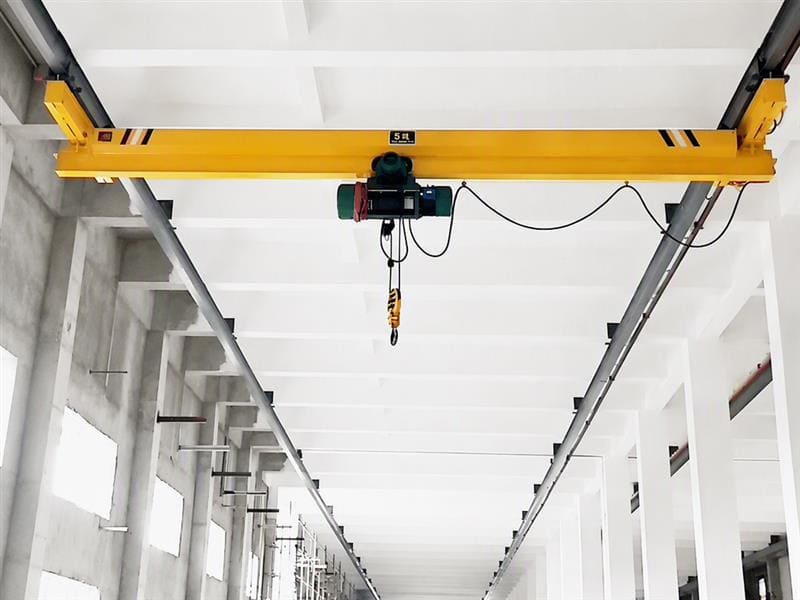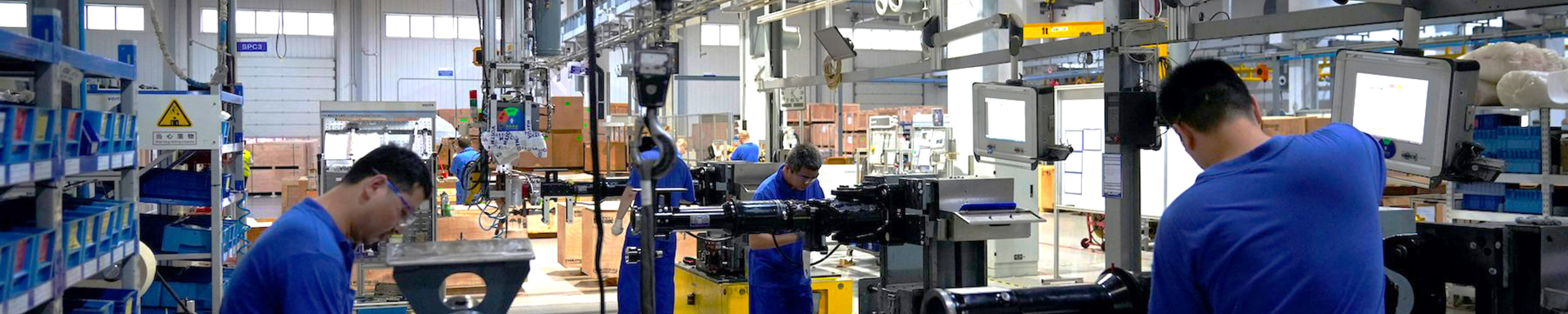
An underhung overhead crane, also known as an underslung crane, is a light-duty material handling crane supported by a ceiling truss or roof structure instead of floor-mounted runway columns. This design makes it especially suitable for workshops with limited space or lower building height, helping users make better use of production and storage areas.
The crane is usually equipped with a CD1 or MD1 electric hoist for efficient lifting and travelling operations. It is widely used in machinery manufacturing, metallurgical plants, warehouses, stockyards, power stations, textile workshops, food processing plants, assembly areas, and other general industrial environments.
An underhung overhead crane can be designed with a single-girder or double-girder structure according to specific working conditions. However, because it is mainly applied to light-load handling, the single-girder design is more common. In many projects, the lifting capacity is usually around 10 tons or below, providing a practical, economical, and space-saving solution for daily material handling tasks.
Key Configurations of an Underhung Bridge Crane
1. Motor
The motor is a core driving component of an underhung bridge crane. It is specially designed for crane applications, offering stable output, reliable starting performance, and strong adaptability to frequent lifting and travelling operations. A high-quality crane motor helps ensure smooth movement, accurate positioning, and dependable performance in daily material handling tasks.
2. Wheels
Crane wheels are responsible for supporting and guiding the crane during travelling operation. They are designed with high load-bearing capacity, good wear resistance, and stable rolling performance. Under heavy working conditions, durable wheels help reduce vibration, improve travelling stability, and extend the service life of the crane rail and travelling mechanism.
3. Hoist
The electric hoist is an economical and efficient lifting solution for an underhung bridge crane. It performs the main lifting and lowering functions and is suitable for general material handling applications in workshops, warehouses, and production areas. With compact structure, reliable braking, and convenient maintenance, the electric hoist helps improve lifting efficiency while keeping equipment investment under control.
4. Main Beam
The main beam is the primary load-bearing structure of the crane. For a single-girder overhead crane, the main girder usually adopts a welded box girder design. This structure provides high rigidity, good torsional resistance, and strong load-bearing capacity, helping the crane maintain stable operation during lifting and horizontal movement.
5. End Beam
The end beams work together with the main girder to form a stable crane structure. They support crane travelling, transfer loads safely, and maintain structural balance during operation. Properly designed end beams help improve rigidity, reduce deformation, and ensure safe load distribution. For an underhung bridge crane, the coordination between the main beam and end beams is essential for smooth operation, reliable performance, and long-term safety.
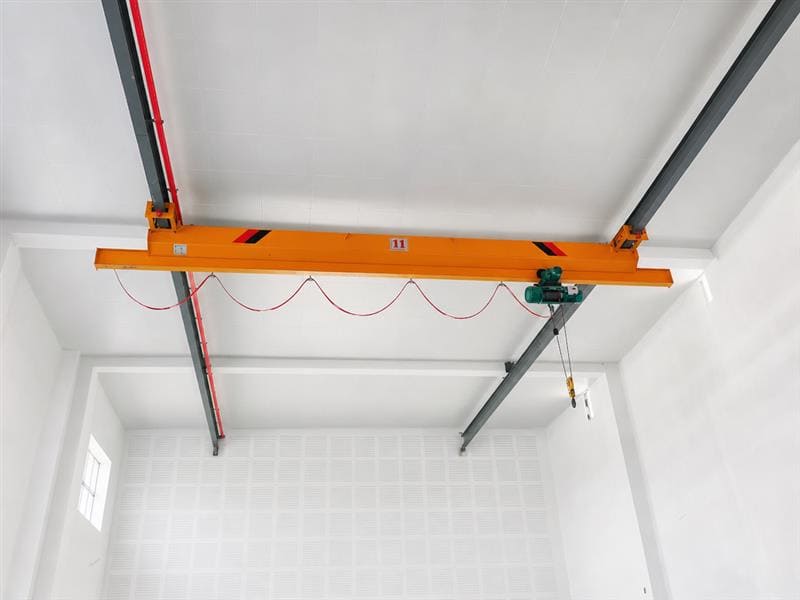
Application Fields of Underhung Overhead Crane
1. Machinery Manufacturing Industry
An underhung overhead crane is widely used in machinery manufacturing plants for parts handling, component transfer, and assembly operations. It helps move semi-finished parts, tooling, molds, and mechanical components between different workstations with better efficiency and control. By reducing manual handling and improving material flow, the crane can lower labor intensity and support a safer, more organized production process.
2. Warehousing and Logistics Industry
In warehousing and logistics facilities, this crane type is suitable for loading, unloading, stacking, sorting, and transferring goods. It is especially practical for light and small goods that require frequent movement within a limited working area. Compared with forklifts or manual handling methods, an underhung overhead crane can make better use of overhead space, reduce floor traffic, and improve operational efficiency in storage and distribution environments.
3. Food Processing Industry
Food processing plants often require clean, flexible, and reliable lifting equipment for handling raw materials, production containers, packaging materials, and finished products. With proper configuration and surface treatment, the crane can support pollution-free operation and meet the hygiene requirements of food production environments. Its smooth movement and compact structure also help reduce interference with production lines and maintain efficient workflow.
4. Assembly Workshop and Laboratory
In assembly workshops and central laboratories, the crane is used for precise material positioning, equipment handling, and component assembly. These environments usually require accurate movement, stable lifting, and flexible operation within limited spaces. An underhung overhead crane can be adapted to refined operational needs, helping operators position parts safely and accurately during production, testing, inspection, or maintenance processes.
5. Light Industrial Applications
Beyond these industries, this crane is also suitable for electronics, packaging, maintenance workshops, and other light-duty industrial applications. Its compact design, easy installation, and efficient lifting performance make it a practical solution for facilities that require dependable overhead material handling without occupying valuable floor space.