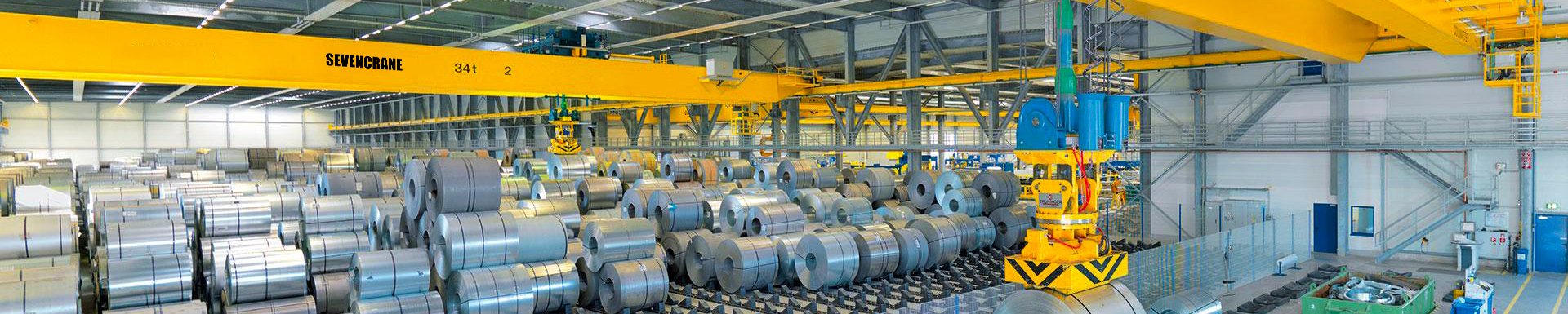

10 Ton Under Running Overhead Crane for Industrial Workshop with Hoist
Main Components of Under Running Bridge Crane
An under running bridge crane consists of several carefully designed components that work together to provide stable, efficient, and safe material handling. Its compact structure makes it particularly suitable for workshops with limited headroom or restricted installation space.
1. Bridge Girder
The bridge girder is the main load-bearing component of the crane. It is generally manufactured using a welded box girder or suitable steel beam structure. The lightweight design helps reduce the load imposed on the building while providing sufficient strength and rigidity for lifting operations.
2. End Trucks
The end trucks are installed at both ends of the bridge girder and connect the crane to the runway system. Equipped with durable traveling wheels, drive components, and buffer devices, they allow the crane to move smoothly and reliably along the runway beams.
3. Electric Hoist
The electric hoist is responsible for lifting and lowering loads. It integrates the lifting motor, gearbox, drum, and wire rope or chain into a compact unit. Depending on the application, variable frequency control can be provided for smoother starting, stopping, and load positioning.
4. Trolley Mechanism
The trolley carries the electric hoist and travels along the bridge girder. It enables the load to move horizontally across the crane span, providing flexible positioning and efficient material handling within the working area.
5. Crane Traveling Mechanism
The traveling mechanism consists mainly of drive motors, reducers, wheels, and related transmission components. It drives the entire crane along the runway system and can be equipped with variable frequency speed control to achieve smooth acceleration, deceleration, and positioning.
6. Electrical Control System
The electrical control system coordinates the lifting and traveling operations of the under running bridge crane. It can include a control cabinet, pendant control, wireless remote control, or other operating systems. Safety functions such as limit protection, emergency stop, and overload protection can also be incorporated according to project requirements.


Applications of Under Running Bridge Crane
The under running bridge crane is a flexible material handling solution for factories, workshops, warehouses, and production facilities where available headroom or installation space is limited. Its compact structure and flexible runway arrangement make it suitable for a wide range of light- to medium-duty lifting applications.
1. Manufacturing Workshops
In general manufacturing facilities, the crane can be used to move machinery, production components, steel structures, molds, and other materials between different workstations. It helps improve material handling efficiency while keeping the production floor clear for other operations.
2. Machinery Assembly Lines
The under running bridge crane is well suited to assembly and maintenance operations where components need to be accurately positioned. It can assist with lifting motors, gearboxes, mechanical parts, equipment frames, and other components during production or equipment installation.
3. Metal Fabrication Workshops
In metalworking and fabrication facilities, the crane can be used for handling steel plates, profiles, welded structures, pipes, and fabricated components. Its flexible movement allows loads to be transferred efficiently between cutting, welding, machining, and assembly areas.
4. Equipment Maintenance Areas
For factories and industrial facilities that require regular equipment maintenance, an under running bridge crane can provide convenient lifting support. It can be used to remove and install motors, pumps, gearboxes, mechanical assemblies, and other components that are difficult to handle manually.
5. Warehouses and Material Handling Areas
The crane can help move materials within warehouses, storage areas, and production logistics zones. It is particularly useful where floor-mounted lifting equipment would occupy valuable working space or interfere with vehicle and personnel movement.
6. Existing Factory Renovation Projects
The under running bridge crane is an excellent option for upgrading older workshops with limited headroom. It can make use of suitable existing building structures and runway arrangements, reducing the need for major structural modifications while adding efficient overhead lifting capability.
7. Low-Headroom Industrial Facilities
Where conventional overhead cranes are restricted by building height, the underhung design can provide a practical alternative. It maximizes usable lifting space and is suitable for various light-duty and medium-duty material handling tasks.


Advantages and Limitations of Under Running Bridge Crane
The under running bridge crane offers a practical lifting solution for facilities where headroom, floor space, or structural conditions limit the use of conventional overhead cranes. However, its application should be evaluated according to the building structure and actual lifting requirements.
Advantages
1. Better Use of Floor Space
The crane runs on an overhead runway system, reducing the need for floor-mounted support columns in suitable buildings. This keeps the workshop floor more open and provides additional space for production, storage, and personnel movement.
2. Excellent Low-Headroom Solution
Its underhung configuration makes efficient use of available vertical space. It is particularly suitable for workshops with low ceilings or limited clearance where a conventional top-running crane may not be practical.
3. Flexible Layout
The runway system can be arranged to serve different workstations, production lines, assembly areas, and maintenance zones. This provides greater flexibility for material handling within a specific working area.
4. Suitable for Light and Medium-Duty Applications
Under running bridge cranes are well suited to lifting machinery components, tools, molds, parts, maintenance equipment, and other loads commonly found in manufacturing and assembly operations.
5. Practical for Factory Renovation
For existing buildings, the crane can sometimes be integrated into the available structural system without requiring extensive floor-level modifications, making it a useful option for facility upgrades.
Limitations
1. Building Structure Requirements
The roof structure, runway beams, brackets, or supporting points must have sufficient strength and rigidity to safely support the crane system and lifting loads.
2. Limited Capacity and Span
Compared with heavy-duty top-running cranes, under running bridge cranes are generally more suitable for lighter loads and moderate spans. High-capacity or large-span applications may require a different crane configuration.
3. Installation and Maintenance Access
The runway alignment, wheels, electrical components, and hoist require regular inspection and maintenance. Adequate access should therefore be considered during the initial design and installation
-

Industrial Double Girder Overhead Crane for Wor...
-

Customized Top Running Bridge Crane for Heavy L...
-
Waste Slag Overhead Bridge Crane With Grab Bucket
-
European Type 10 Ton 16 Ton Double Beam Bridge ...
-

Custom Underhung Bridge Crane for Small Worksho...
-

Smart Control Double Girder Overhead Crane for ...